



How to Choose Sandwich Panel Thickness for Cleanroom and Laboratory Projects?
Time : July 02, 2026 View : 1132
When choosing the thickness of sandwich panels for a cleanroom or laboratory, there are many aspects to take into consideration. Wall strength, fire properties, thermal insulation and sound absorption are all affected by the thickness of the panels. In addition to these aspects, the choice of thickness can also affect the speed of the installation, the tightness of the seals and the final appearance of the room with all doors, windows, ceilings and aluminum profiles neatly fitted.
While more panel thickness may be better, for most cleanroom partitions 50 mm thickness is sufficient. However, for laboratories, semiconductor rooms, medical rooms and similar areas where higher insulation values are required, 75 mm, 100 mm, or even more customized thicknesses are more reliable. So, the best way is to match the needed thickness for a certain room application with the best core material, the humidity, the needed fire protection classification and the building structure where the panels will be installed.
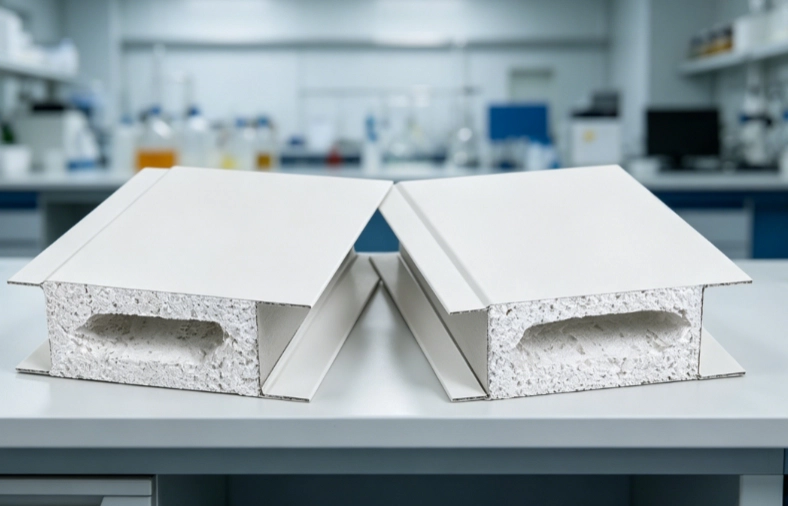
Why Does Sandwich Panel Thickness Matter in Cleanroom Projects?
Panel thickness is not only about the number on the specification sheet. It decides how the whole wall system behaves after months and years of use. A cleanroom panel must stay flat, resist impact, keep joints tight, and support daily cleaning. In laboratories, this matters even more because walls may meet moisture, temperature change, chemical cleaning, and frequent equipment movement.
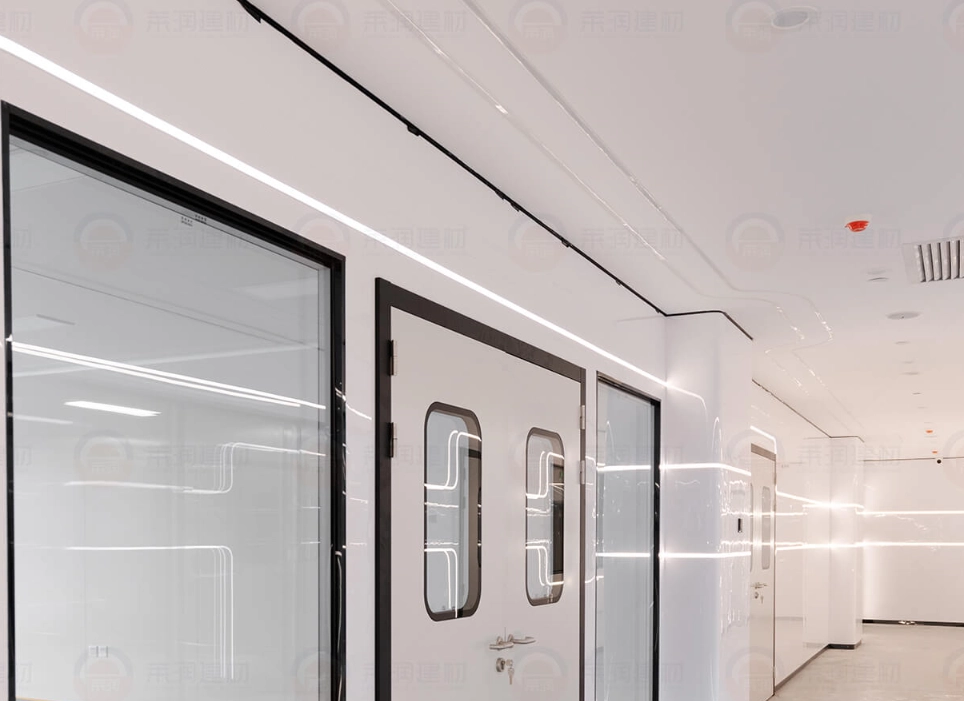
It Changes Wall Strength and Daily Use
For basic cleanroom partitions, a 50 mm panel is widely used because it balances cost, weight, and installation speed. It is suitable for many indoor wall and ceiling systems in hospitals, pharmaceutical factories, electronics plants, food factories, and daily chemical production areas.
When the room has heavier traffic, more equipment movement, or higher ceiling requirements, thicker panels give better rigidity. This is why many buyers move from 50 mm to 75 mm or 100 mm when the room needs more stable wall performance.
It Affects Fire, Heat, and Sound Control
Cleanroom and laboratory projects often care about more than cleanliness. Fire prevention, thermal insulation, and sound insulation also come into the decision. Rock wool panels are often selected when sound insulation and high fire resistance are strong concerns. Magnesium oxysulfide panels are useful when flatness, moisture stability, and no halogen reversion are important.
A small buying mistake here can be expensive. Once panels are installed, changing thickness later may affect doors, windows, ceiling frames, aluminum accessories, and on-site labor.
It Changes Installation Cost and Joint Detail
Thickness also affects the joint system. Tongue-and-groove panels are popular because they connect faster and help keep the wall surface clean. In LAIRUN’s knowledge base, tongue-and-groove panels are described as simple and fast to install, with strong sealing and lower labor cost in repetitive cleanroom work.
For bigger projects, this is not just about saving a few hours. It can affect the construction schedule, the amount of cutting waste, and the final look of the wall seams.
Which Thickness Should You Choose for Common Cleanroom Areas?
A practical selection starts with the room type. Different clean areas do not need the same panel thickness. A corridor wall, a laboratory partition, a semiconductor cleanroom, and a high-insulation ceiling should not be treated as one product. Before checking price, check the room purpose first.
50 mm for General Partitions and Standard Clean Areas
For many cleanroom wall partitions, 50 mm is the regular choice. It works well when the project mainly needs clean separation, fire resistance, easier installation, and a neat wall finish.
This thickness is often used in:
-
Hospital clean areas
-
Pharmaceutical workshops
-
Electronics factories
-
Food and beverage production rooms
-
Daily chemical workshops
-
General laboratory partitions
If the project area is large and budget control is tight, 50 mm panels can reduce material weight and make installation easier. LAIRUN’s product center includes different cleanroom panel types, so buyers can compare core material and thickness together instead of judging by thickness alone.
75 mm to 100 mm for Stronger Labs and Controlled Rooms
For laboratories, biopharmaceutical cleanrooms, and semiconductor areas, 75 mm or 100 mm is often worth checking. These spaces usually ask for better thermal insulation, stronger wall feel, tighter joints, and more stable performance.
A real project detail from LAIRUN’s knowledge base is useful here: in a semiconductor cleanroom project, 50 mm rock wool handmade panels and 100 mm glass magnesium rock wool handmade panels were used, with 0.476 mm color-coated steel plates on both sides. That kind of choice is not random. It matches fire resistance, insulation, antibacterial needs, and long-term room stability.
Small note from real purchasing work: many buyers ask for the thickest option first, then reduce the spec after seeing the budget. It is better to ask the supplier for room-by-room recommendations at the start.
125 mm to 200 mm for Special Insulation or Heavy Duty Sections
Some projects need more than 100 mm. The Magnesium oxysulfide sandwich panel from LAIRUN can be made in 50 mm, 75 mm, 100 mm, 125 mm, 150 mm, 175 mm, 200 mm, or customized thickness. Its effective width can be 1150 mm or 950 mm, and the length can be made according to project demand, normally within 6000 mm.
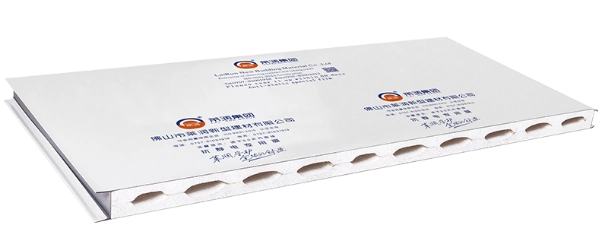
Thicker panels may be suitable when the project needs:
-
Better thermal insulation
-
Stronger wall or ceiling performance
-
Higher fire safety margin
-
Special room temperature control
-
Large cleanroom areas with strict long-term stability
But thickness alone does not solve everything. Surface metal, core material, joint type, and aluminum accessories still need to match the system.
How Should Core Material Change the Thickness Decision?
After choosing a thickness range, the next step is core material. Two panels with the same 50 mm thickness may perform very differently if their core materials are different. This is where many procurement mistakes happen. Buyers compare price per square meter, but the real cost comes from deformation, poor sealing, moisture problems, or slow installation.
Magnesium Oxysulfide for Flat and Moisture Stable Walls
Magnesium oxysulfide is a strong option for cleanrooms and laboratories that need flatness, fire resistance, and stable long-term use. LAIRUN’s product page says its magnesium oxysulfide purification panel has no halogen reversion, does not release white crystalline substances, and resists moisture, condensation, and humid air.
It also has Class A non-combustible performance, can withstand local exposure above 1000°C, and the overall flatness error can be controlled within 0.1 mm. For laboratory walls, this matters because visible seams and uneven surfaces are not only ugly. They also make cleaning harder.
The same product is described with a service life of no less than 20 years. For long-term laboratory or healthcare projects, that number is worth noting.
Rock Wool for Fire and Sound Needs
Rock wool panels are often selected for projects with stronger fire and sound insulation requirements. In LAIRUN’s product information, rock wool core material is linked with Class A fireproof performance, thermal insulation, sound insulation, and good load-bearing behavior.
For food factories or areas with high noise control needs, rock wool may be a better match than choosing a thicker but less suitable panel. In other words, do not use thickness to cover up the wrong material choice.
Inorganic Pre Coated Boards for Easy Cleaning Areas
For some laboratory walls, surface cleaning matters as much as thickness. LAIRUN’s knowledge base mentions inorganic pre-coated plates with a dense surface, antibacterial and mold-resistant features, easy cleaning, heat resistance, and acid and alkali resistance. These details are useful in medical, laboratory, and food production spaces.
So, if the wall needs frequent cleaning, check surface material as early as panel thickness. A strong panel with the wrong surface can still become a maintenance headache.
What Project Details Should Be Checked Before Ordering Panels?
A good cleanroom panel order should not be based on “50 mm or 100 mm” only. Before confirming the order, check the actual room layout, width, height, door openings, ceiling system, corner treatment, humidity, cleaning routine, and fire requirement. A little more checking before production usually saves much more work on site.
Width, Length, and Cutting Loss
For cleanroom projects, panel size should follow the room layout as closely as possible. LAIRUN’s product information shows that some panels support customized width, length, color, and thickness. This helps reduce cutting loss on site and keeps the final wall surface cleaner.
For large projects, it is also useful to review real project examples in the case center. A research laboratory project, hospital renovation, or chemical cleanroom project can give buyers a more realistic sense of how different panels are used.
Joints, Doors, Windows, and Ceiling Loads
Thickness must work with the installation structure. Tongue-and-groove jointing is a common choice because it is fast and neat. Some handmade panels can also use middle-aluminum joints or other cleanroom aluminum profiles.
Before ordering, check:
-
Wall height
-
Door frame thickness
-
Window position
-
Ceiling load
-
Corner aluminum
-
Pipe or conduit needs
-
Pull rivet and screw positions
-
Whether panels need pre-opened holes
The solution center is useful for matching panel function with fire resistance, heat insulation, soundproofing, and antimicrobial needs.
Humidity and Cleaning Method
Humidity is often ignored at the quoting stage. That is risky. Some panel series are better for dry to normal humidity areas, while others suit high humidity or washing conditions better. Magnesium oxysulfide panels are valued for moisture stability and no halogen reversion, which is why they are often considered for laboratory and biopharmaceutical spaces.
Before placing the order, share the room humidity range, cleaning chemicals, washing frequency, and temperature changes with the supplier. This sounds basic, but it prevents a lot of later arguments.
Why Should Supplier Capability Be Part of Thickness Selection?
Thickness selection also depends on factory capability. A supplier that can only offer standard panels may push the buyer toward easy stock sizes. A stronger manufacturer can discuss material, thickness, width, length, surface sheet, joint type, and project delivery together. That makes the final choice much closer to the real job site.
Production Capacity Matters for Large Projects
LAIRUN is located in Foshan, Guangdong, with a factory area of 38,000 square meters. Its company information states 8 high-automation production lines, daily output of 25,000 square meters, and long experience in cleanroom sandwich panel R&D.
For large cleanroom and laboratory projects, this matters. If panels arrive in batches with unstable quality or late delivery, the installation schedule becomes messy very quickly.
Testing and Quality Control Reduce Site Risk
LAIRUN’s knowledge base mentions strict inspection before shipping, multiple quality systems, and support from professional teams in R&D, production, sales, and after-sales service. It also lists certifications and testing reports related to quality and environmental management.
These details do not replace your own project inspection, of course. But they are good signs when selecting a supplier for cleanroom panels, especially when the project has strict acceptance standards.
Custom Support Helps Avoid Overbuying
Not every wall needs 100 mm. Not every lab needs the same core material. A supplier with product design, material selection, technical support, and after-sales service can help you avoid overbuying thick panels where 50 mm is enough, or under-specifying panels where higher fire, sound, or moisture performance is needed.
For project-specific advice, buyers can check LAIRUN’s service page or send drawings through the contact us page.
FAQ
Q1: What Is the Most Common Sandwich Panel Thickness for Cleanroom Walls?
A: 50 mm is commonly used for many cleanroom partitions and ceilings. It gives a good balance of cost, weight, fire resistance, and installation speed. For stricter rooms, 75 mm or 100 mm may be better.
Q2: Is a Thicker Sandwich Panel Always Better for Laboratories?
A: No. A thicker panel may give better strength or insulation, but core material, surface sheet, joint type, and cleaning resistance matter too. A 50 mm panel with the right material may perform better than a thicker panel with the wrong core.
Q3: When Should You Choose Magnesium Oxysulfide Sandwich Panels?
A: Choose magnesium oxysulfide panels when the project needs good flatness, no halogen reversion, moisture stability, Class A fire resistance, and long service life. They are suitable for laboratories, biopharmaceutical rooms, and other clean spaces with high wall quality needs.
Q4: What Thickness Should Be Used for Semiconductor Cleanrooms?
A: Many semiconductor cleanrooms use 50 mm to 100 mm panels, depending on wall position, ceiling needs, insulation, and fire requirements. In one LAIRUN project reference, 50 mm rock wool handmade panels and 100 mm glass magnesium rock wool handmade panels were used.
Q5: What Information Should Be Sent Before Asking for a Quote?
A: Send the room layout, wall height, required thickness, core material preference, humidity range, fire requirement, surface material, color, door and window details, and target delivery time. The quote will be much more accurate.
