



How Do Magnesium Oxysulfide Sandwich Panels Prevent Corrosion and White Crystal Formation?
Time : July 30, 2026 View : 1191
White crystals, damp panel edges, rusty fasteners and dirty metal surfaces are indicators of a material / moisture related problem that typically requires more than a simple cleaning. Such defects can compromise coating, allow panels to come loose, increase maintenance activity and form a number of questions when inspected in cleanrooms, laboratories, hospitals and electronics facilities.
This product avoids the problems associated with traditional pane structure by controlling the binder and core formation. As with all products given a name, one must examine the formula, moisture, metal facing, joints, test documents, etc. to confirm that this product actually is what it is called.
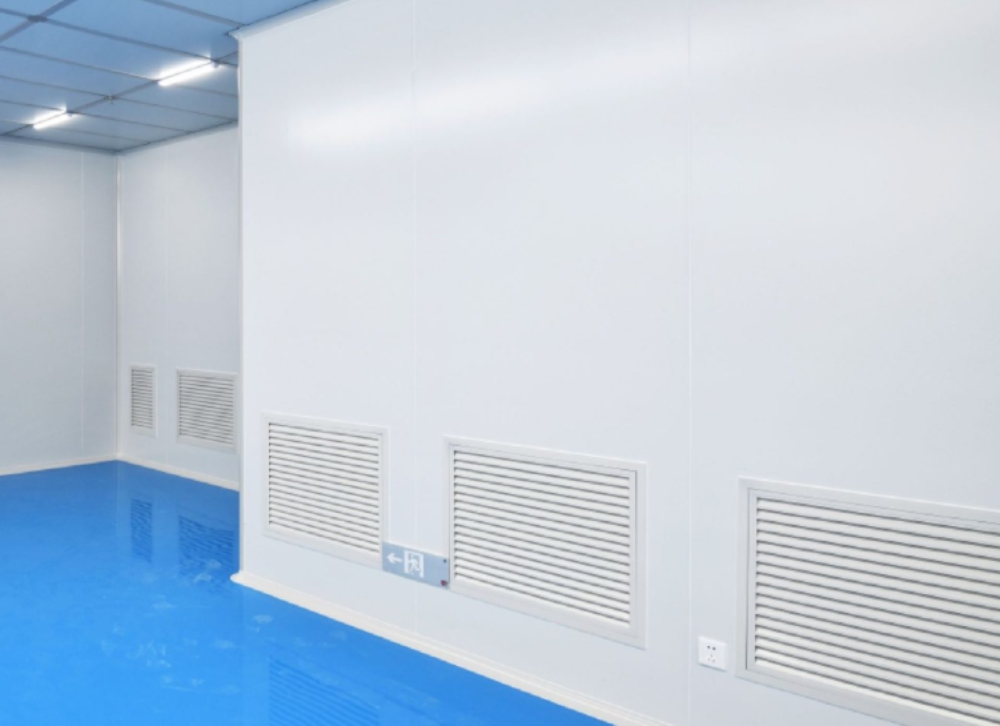
Why Do Corrosion and White Crystals Occur on Some Magnesium Panels?
The issue is often linked to magnesium oxychloride systems. These materials may be strong and light, but their behavior in damp conditions depends on raw material ratios, additives, curing, and production control. A panel can look fine at delivery and show trouble months later.
Moisture Can Move Soluble Salts
When a chloride-containing core takes in moisture, soluble salts can move through its pores. Water then evaporates at an edge, cut opening, joint, or damaged coating. Pale crystals remain on the surface. This is commonly called efflorescence or halogen reversion.
From published research, the poor water absorption of some magnesium oxychloride materials are attributed to moisture absorption, efflorescence and corrosion. Not all chloride-based panels will fail in use, but it is exposure and the formula that is critical.
Chloride Can Reach Metal Parts
Fasteners, rivets, steel skins, aluminum profiles, and concealed frames often sit close to the core. Moisture may carry chloride ions to scratches, drilled holes, or poorly sealed joints.
A small rust ring around a screw can later become coating bubbles, dark streaks, swollen seams, or loose trim. Cleaning the crystal deposit only treats the visible symptom. The source may still be inside the panel.
How Does Magnesium Oxysulfide Chemistry Reduce the Risk?
A magnesium oxysulfide sandwich panel uses a sulfate-based binder instead of a magnesium chloride binder. Removing chloride from the core cuts off one major route behind salt release and chloride-related metal attack.
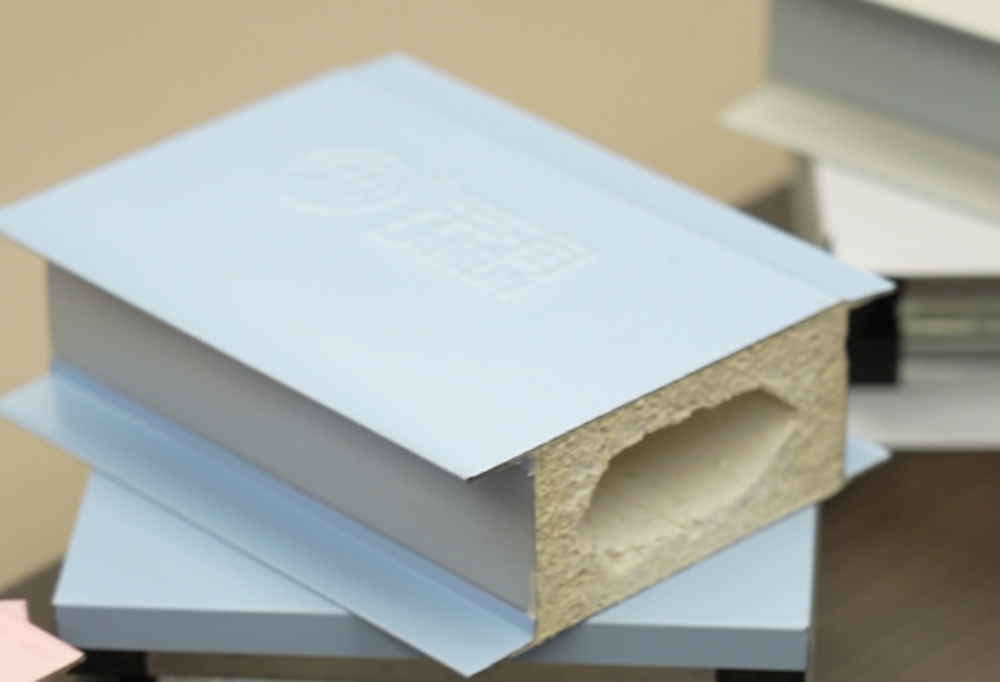
The Core Uses Magnesium Sulfate Instead of Magnesium Chloride
Magnesium oxysulfide systems combine magnesium oxide and magnesium sulfate with reinforcement and modifiers. Research notes that magnesium oxysulfide cement contains no chloride ions and causes much less steel corrosion than magnesium oxychloride cement.
Water resistance still depends on the exact formula, so chloride-free does not mean test-free.
LAIRUN’s technical material describes a core made with selected magnesium oxide, magnesium sulfate, alkali-resistant fiberglass cloth, plant fibers, and modifying agents. It also describes the material as free from formaldehyde and resistant to decay, cracking, and moisture absorption.
A Stable Internal Structure Limits Movement
Modified magnesium oxysulfide binders can form a stable strength phase known in technical literature as the 5·1·7 phase. Suitable modifiers can improve pore structure, volume stability, and water resistance.
The practical point is simple. Do not buy from the ingredient list alone. Mixing, molding, curing, and inspection decide whether the finished core stays stable.
How Does Panel Construction Add More Protection?
Chemistry handles the chloride problem, while panel structure helps keep moisture away from vulnerable areas. A flat, stable core creates tighter seams and puts less stress on sealants, coatings, and metal fittings.
Integral Molding Reduces Weak Bonding Areas
LAIRUN states that its magnesium oxysulfide core is molded in upper and lower layers using an arch-bridge structural principle. The form spreads local stress and needs less glue than a hollow panel assembled from separately bonded pieces.
The product data states that this structure limits deformation and provides twice the load-bearing capacity of a hollow glass-magnesium panel. Less movement matters because uneven expansion can crack sealant and let moisture enter the joint.
Flatness and Joint Quality Support Better Sealing
The product page reports an overall flatness error within 0.1 mm through low core expansion and one-time precision cutting. Flatter panels create more even joints, reduce stepped seams, and need less corrective sealant.
Available facings include:
- Galvanized steel
- Stainless steel
- Aluminum alloy
- Aluminum-magnesium-manganese sheet
- Inorganic pre-coated board
Tongue-and-groove jointing is listed as the standard mounting structure. You can compare these options in the cleanroom panel product center.
For wet cleaning or chemical exposure, check the coating type, metal thickness, edge sealing, fastener compatibility, and cleaning-agent limits. Color comes later.
What Should You Check Before Accepting a No-Corrosion Claim?
“No halogen reversion” is useful only when the supplier can support it with stable production and relevant records. Turn the claim into a technical checklist before placing the order.
Request a Clear Material and Test Package
Ask for:
- Written confirmation that the core uses magnesium sulfate, not magnesium chloride
- Water absorption or immersion test data
- Dimensional stability and flatness records
- Fire reports for the complete panel assembly
- Metal compatibility or corrosion information
- Recommended temperature and humidity limits
- Steel skin grade, coating, and thickness
- Joint drawings and an approved production sample
The product page lists effective widths of 950 mm and 1,150 mm, thicknesses from 50 mm to 200 mm, normal lengths up to 6,000 mm, and custom sizing. It also lists Class A non-combustibility under GB8624-1997, a stated service life of at least 20 years, and resistance to rust, scrubbing, acid, and alkali.
These are supplier specifications. Request matching documents for the exact core, facing, thickness, and joint included in your order. The fire, sound, heat, and antimicrobial solutions can help you organize questions by room type instead of asking for one general certificate.
Inspect Details That Commonly Let Water In
Check cut edges, cable holes, pipe penetrations, ceiling suspension points, floor junctions, doors, windows, and repair areas. These locations are easy to miss and often allow moisture to enter first.
Keep an approved sample for comparison with the delivered batch. It gives your site team a practical reference for flatness, coating, joint shape, edge finish, and sealant work.
Where Does This Panel Make the Most Sense?
Magnesium oxysulfide panels fit projects that need clean surfaces, fire control, dimensional stability, and protection of nearby metal components. The best use is normally an interior controlled environment with a known humidity range and cleaning method.
Cleanrooms, Laboratories, and Medical Areas
Common applications include pharmaceutical rooms, research laboratories, healthcare spaces, electronics production, semiconductor facilities, food areas, and other controlled interiors.
The product page lists a 40,000 m² laboratory project using magnesium oxysulfide sandwich panels. This shows that the material can be supplied for a large cleanroom project, though the specification still needs to match the individual rooms.
You can review additional cleanroom project cases to compare panel systems by industry. A case gives useful context, but it cannot replace your own fire, span, humidity, and cleaning requirements.
Moisture Resistance Still Has Limits
Moisture resistance does not mean the panel should sit in standing water, direct outdoor rain, or an uncontrolled wet room. The supplied technical material gives an ambient humidity range of about 20% to 65% for this panel type.
Ask for written confirmation when your conditions fall outside that range. A washdown food room, a dry semiconductor area, and a hospital corridor do not need the same surface or joint detail.
Why Should Production Control Be Part of Your Buying Decision?
Magnesium oxysulfide performance depends on stable raw material ratios, mixing, molding pressure, curing, cutting, and bonding. A good sample has limited value when the mass-production batch is made differently.
According to its company profile, LAIRUN operates a 38,000 m² facility with high-automation production lines and a stated daily output of 25,000 m². Its company information also describes in-house magnesium oxysulfide core work, multiple inspection systems, and automated handmade-panel production.
Production scale is helpful, but technical review still comes first. Use LAIRUN’s technical support service to confirm panel thickness, facing, joints, openings, accessories, packing, and site conditions. Record the approved details in the purchase order.
Final Thoughts
Magnesium oxysulfide sandwich panels prevent corrosion and white crystal formation mainly by removing chloride from the binder, improving moisture stability, and using a molded core that limits movement. Flat surfaces, compatible metal skins, sealed edges, and tight joints add further protection.
Your safest buying route is straightforward. Verify the core chemistry, review water and fire reports, approve a sample, and match the facing to the cleaning environment. For drawings, samples, quotations, or project-specific advice, contact LAIRUN.
FAQ
Q1: What Causes White Crystals on Magnesium Sandwich Panels?
A: Moisture can dissolve and move salts in some chloride-containing cores. When the water evaporates at the surface, pale crystalline deposits may remain.
Q2: Does Magnesium Oxysulfide Contain Chloride Ions?
A: A true magnesium oxysulfide binder uses magnesium sulfate instead of magnesium chloride. Ask for a material declaration and test data before approval.
Q3: Can Magnesium Oxysulfide Panels Be Used in Humid Rooms?
A: They resist moisture-related halogen reversion, but the allowed humidity depends on the formula, facing, joint, and installation. Confirm continuous high-humidity or washdown use with LAIRUN.
Q4: What Thicknesses Are Available for Cleanroom Projects?
A: LAIRUN lists 50, 75, 100, 125, 150, 175, and 200 mm panels, plus custom sizes. Choose according to fire, span, sound, insulation, door, and ceiling requirements.
Q5: How Can You Check Whether a Panel Will Corrode Metal Fittings?
A: Confirm that the core is chloride-free, review compatibility data, inspect edge sealing, and check the selected fasteners and metal skins before bulk production.
