

How Can a 50 mm MGO Rock Wool Panel Deliver 74 Minutes of Fire Protection
Time : August 07, 2026 View : 1037
Although 50mm wall panels are often perceived to be to thin to be effective for fire protection, within a clean room environment the walls are also required to remain flat, be cleanable, sealed and be stable. In many cases the perceived inadequacy of a 50mm thick wall assembly is determined solely by thickness. However, the actual result that is achieved by a wall assembly is determined by the entire assembly and includes the core material, outer layers, facings, the direction of the fibers, the joints and the edge details of the assembly. In this instance a 50mm thick wall assembly consists of an A1 non-combustible core of rock wool, two outer layers of magnesium oxide, metal facings and fiber direction to provide additional strength. The joints and the edge details of the panels are also critical to the overall performance of the completed wall assembly.
According to the published product data, the 50 mm MGO rock wool sandwich panel provides a stated fire-protection time of 74 minutes. For a buyer, the useful question is how the panel reaches that figure, whether the tested construction matches your project, and which details need checking before you order.
What Does 74 Minutes of Fire Protection Mean for Your Project?
A fire-resistance time describes how long a tested building element can maintain specified performance under defined conditions. It does not mean every 50 mm panel will behave the same way in every wall. The core, boards, skins, joints, supports, openings, and installation method all affect the result.
A1 Non-Combustible Rock Wool at the Center
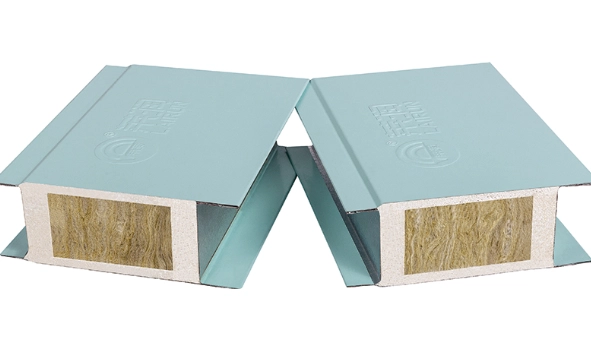
The rock wool core is made mainly from basalt and other mineral raw materials melted at high temperature and formed into fibers. LAIRUN lists the core as A1 non-combustible material with temperature resistance above 1000°C.
Because the core does not act as fuel, it helps slow heat transfer and limit flame spread, providing more time for evacuation and emergency response.
MGO Layers Add a Second Fire Barrier
Rock wool supplies the main insulation layer, while magnesium oxide boards add rigidity and another non-combustible barrier. The structure combines metal surfaces, MGO boards, and dense rock wool instead of asking one material to do every job.
This layered design also supports impact resistance, flatness, and load-bearing strength. Carts, tools, maintenance work, and repeated cleaning all test the assembly long before a fire event.
Tongue-and-Groove Joints Control Weak Points
Fire can move through gaps faster than through a properly built panel. The tongue-and-groove mounting structure helps form close, repeatable connections and speeds up site assembly.
The joint remains reliable only with specified profiles, fasteners, sealants, and edge details. Openings, penetrations, and ceiling connections need the same care.
Why Can a 50 mm Panel Reach This Level of Performance?
A 50 mm panel works because its materials are arranged for a clear purpose. More thickness may improve thermal or acoustic performance, but strong fire behavior starts with core composition, fiber layout, board protection, and connection quality.
Vertical Fibers Support Strength and Stability
The rock wool fibers sit perpendicular to the metal surface. High-density strips are staggered along the panel length, helping the panel carry loads and resist deformation better than a loosely filled core.
This layout also keeps the core stable during handling and installation, reducing weak areas caused by local compression or movement.
Density Changes More Than the Price
LAIRUN offers rock wool densities of 60, 80, 100, and 120 kg/m³, with custom choices available. Higher density may improve rigidity and sound control, but it adds weight and cost.
Choose density based on wall height, ceiling span, acoustic targets, transport limits, and structural design. Ask for unit weight, support spacing, and the fire test basis rather than selecting from price alone.
The 74-Minute Figure Belongs to a Tested Build-Up
The stated result applies to the specified 50 mm construction. Your project may use different steel thickness, surface material, panel length, fastener spacing, sealant, openings, or support conditions.
Before approval, check:
- Tested panel thickness and core density
- MGO board arrangement
- Joint type and orientation
- Supporting frame and fixing method
- Fire integrity and insulation criteria
- Test standard, laboratory, and report validity
This connects the product claim to the wall you will actually build.
Which Specifications Should You Confirm Before Ordering?
Fire performance is often the first concern, but buyers also worry about dimensional mismatch, damage, delays, cleaning problems, and change orders. A clear specification prevents many issues before production.
Size, Thickness, and Surface Material
Effective widths are 1150 mm and 950 mm. Thickness options run from 50 mm to 200 mm, with custom sizes available, and normal length can be made to project requirements up to about 6000 mm.
Surface choices include galvanized steel, stainless steel, aluminum alloy, aluminum-magnesium-manganese sheet, and inorganic pre-coated board. Match the surface to cleaning chemicals, corrosion risk, impact level, hygiene rules, and budget. Related systems are listed in the LAIRUN Product Center.
Openings and Embedded Services
Cleanroom walls often need sockets, cable routes, pipe openings, doors, windows, and return-air details. Factory-prepared openings reduce dust, scrap, and rework at the jobsite.
Send coordinated drawings before production. Mark each opening by size, centerline, height, and service type. Late cutting can damage the MGO layer, expose the core, or weaken the tested assembly.
Packaging, Handling, and Installation
Long panels need flat support during transport and storage. Edges should stay protected, and stacks must remain dry and level. Dragging panels across one another can create surface damage.
LAIRUN provides project support through its service system. For overseas orders, confirm packing, container loading, unloading equipment, spare-panel quantity, and site storage before shipment.
Where Does the MGO Rock Wool Panel Fit Best?
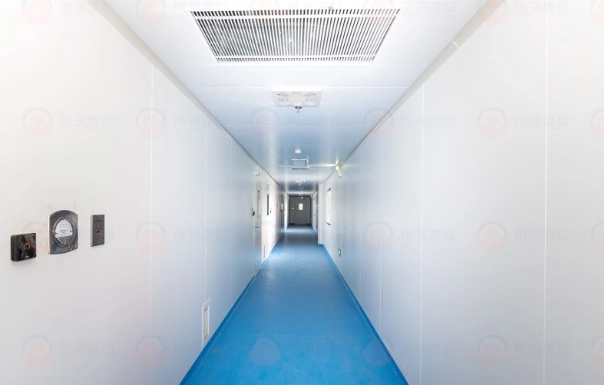
The panel suits projects needing fire resistance, cleanliness, strength, thermal control, and sound reduction, especially where a basic lightweight partition is not enough.
Laboratories and Healthcare Areas
Laboratories and healthcare facilities may contain electrical equipment, chemicals, or valuable instruments. Their walls must resist fire while staying smooth and easy to clean.
Rock wool reduces sound transfer between technical rooms, corridors, and work areas. LAIRUN’s case portfolio includes laboratory and healthcare projects using magnesium oxide rock wool systems in large cleanroom areas.
Electronics and Semiconductor Facilities
These facilities need stable temperatures, controlled pressure, low particle release, and reliable joints. Thermal insulation reduces heat transfer, while the rigid core supports long walls and ceiling sections.
Surface material still needs careful selection. Antistatic needs, cleaning methods, corrosion conditions, and equipment movement can change the best facing specification.
Food, Pharmaceutical, and Controlled Production
Food and pharmaceutical sites need surfaces that can be cleaned often without trapping dirt at joints. Tongue-and-groove installation creates a tidy connection, while factory sizing lowers cutting inside controlled areas.
Rock wool also helps with machine noise and room-to-room heat transfer. The LAIRUN Solution Center compares fire resistance, antimicrobial surfaces, thermal insulation, and other project needs.
Why Should You Review the Supplier as Carefully as the Panel?
A good specification can still fail when production control, raw materials, or delivery planning are weak. For international projects, factory capacity and technical response matter almost as much as the panel data sheet.
Production Capacity for Large Projects
LAIRUN operates a 38,000 m² production site with eight automated lines and a stated daily output of 25,000 m². Its range includes rock wool, MGO, MGO rock wool, and magnesium oxysulfide panels.
This helps when one facility needs several wall and ceiling builds. The company’s background is available on the About LAIRUN page.
Technical Checks Before Production
Send the supplier your room layout, wall heights, ceiling spans, fire target, surface finish, openings, quantities, and delivery sequence. Ask for shop drawings and a clear bill of materials.
A sample panel can reveal joint tightness, surface color, edge finish, weight, and handling method. It does not replace a test report, but it prevents surprises.
A Practical Buying Decision
A 50 mm panel can deliver strong fire performance when the complete assembly matches the tested design. The 74-minute figure comes from A1 rock wool, MGO protection, dense core layout, stable facings, and controlled joints.
Verify the report, match the specification, coordinate openings early, and use trained installers. For project-specific dimensions, density, surfaces, or connections, send drawings through the LAIRUN contact page.
FAQ
Q1: Is a 50 mm MGO rock wool panel thick enough for every fire-rated wall?
A: No. LAIRUN lists a 74-minute fire-protection time for its specified 50 mm construction, but your required rating, framing, joints, and local code must match the test report.
Q2: What rock wool density should you choose?
A: LAIRUN offers 60 to 120 kg/m³ options. The right density depends on structural load, sound control, panel weight, ceiling span, and cost.
Q3: Can the panel be used for walls and ceilings?
A: Yes. LAIRUN supplies the panel for cleanroom partitions and ceiling systems, subject to correct support spacing, suspension design, and fixing details.
Q4: Can openings and service routes be prepared at the factory?
A: Yes. LAIRUN can make custom sizes and project details. Coordinated drawings should be approved before production to reduce on-site cutting.
Q5: Does a non-combustible core make the whole room fireproof?
A: No. LAIRUN’s A1 rock wool core supports fire safety, but doors, windows, penetrations, sealants, profiles, supports, and installation quality must also form a compliant system.
