



Why Do Rock Wool Sandwich Panels Delaminate and How Can Buyers Prevent It?
Time : August 14, 2026 View : 1236
Delamination happens when the metal facing starts to separate from the rock wool core. It may begin as a small hollow area, a lifted corner, or a faint bulge near a joint. Later, the loose section can spread. The panel loses flatness, local strength drops, and gaps may collect dust or allow moisture into the wall system.
For a cleanroom, food plant, laboratory, cold room, or electronics facility, this is more than a cosmetic problem. Replacing finished wall panels can interrupt production, disturb sealed joints, and damage nearby doors, windows, or service lines. Most cases are linked to material preparation, bonding, pressing, storage, installation, or the operating environment. Buyers can reduce these risks long before the panels reach the site.
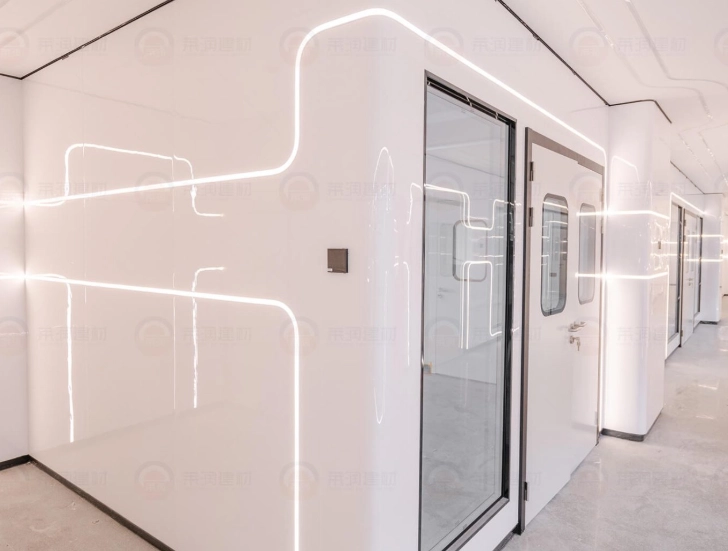
What Does Delamination Look Like in a Finished Panel?
Delamination is not always easy to spot during delivery inspection. A panel may look smooth while the bond beneath one section is already weak. Heat, moisture, vibration, and routine cleaning can make that weakness more visible over time.
Common Warning Signs
You should check for:
- A hollow sound when tapping the metal skin
- Raised areas or local bubbles
- Corners that lift away from the core
- Ripples that appear after temperature changes
- Rust marks near cut edges or joints
- Movement around doors, windows, and pipe openings
- A visible gap between the facing and core
A small surface dent is not always delamination. The main difference is movement. A dent stays in one place, while a poorly bonded facing may flex, sound hollow, or continue lifting.
Inspect the panel center, edges, and both ends. Buyers often check only the large flat area. The first problem is commonly found near an unfinished cut, a damaged corner, or a service opening.
Why Does a Rock Wool Sandwich Panel Delaminate?
The bond must connect two very different materials. The metal facing is smooth and relatively dense. Rock wool is fibrous and porous. Good production needs controlled surface preparation, adhesive coverage, pressure, temperature, and curing time. A shortcut at any one of these stages can weaken the finished panel.
Contaminated or Damp Bonding Surfaces
Dust, oil, rust, release agents, and moisture can block direct contact between the adhesive and metal sheet. Damp rock wool creates another problem. Water inside the core may turn into vapor when the panel becomes warm, placing pressure on a bond that is already weak.
Before lamination, the steel surface should be clean and the core should be dry. This sounds basic, but basic steps cause plenty of expensive failures.
Uneven Adhesive Coverage
Too little adhesive leaves dry spots. Too much can also cause trouble, especially when the adhesive pools in one area and cures unevenly. The type of adhesive must suit the metal facing, rock wool core, pressing process, and expected service temperature.
The production line should spread adhesive across the full bonding area rather than only at several points. Local bonding may hold during factory handling but fail after repeated heating and cooling.
Poor Pressing or Incomplete Curing
A sandwich panel needs even pressure while the adhesive cures. Low pressure can leave gaps between the rock wool and metal skin. Excessive pressure may crush part of the core and change panel thickness.
Pressing time also matters. Moving or stacking panels before the adhesive has cured can disturb the bond. LAIRUN’s production information describes automated panel opening, material loading, pressing, and hot pressing within integrated production lines. This kind of controlled process helps reduce variation between batches.
Weak Core Structure
Rock wool density is only one part of core quality. Fiber direction and strip arrangement also affect how well the panel carries load and stays bonded.
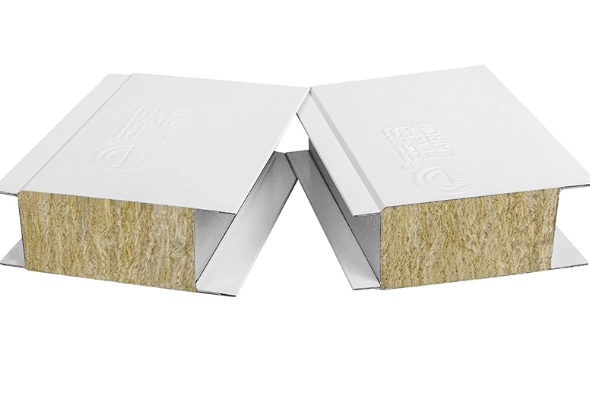
In LAIRUN’s Rock wool sandwich panel, the fibers are arranged perpendicular to the metal facing. High-density strips are placed along the panel length. This structure supports load transfer between both metal skins and helps the core resist compression.
Available density choices include 60, 80, 100, and 120 kg/m³, with custom options for specific projects. A higher figure is not automatically the right answer. You should match density to the span, wall height, impact risk, sound control target, and ceiling load.
How Can Buyers Reduce Delamination before Ordering?
A low unit price can hide missing details. Two quotations may both say “50 mm rock wool panel,” yet the actual facing thickness, density, adhesive process, coating, and edge structure may be quite different.
Ask for a complete construction description before comparing offers.
Specify the Whole Panel Build
Your purchase specification should include:
- Panel thickness
- Effective width
- Maximum length
- Rock wool density
- Fiber direction
- Metal type
- Metal sheet thickness
- Surface coating
- Joint structure
- Edge treatment
- Fire test requirement
- Operating temperature and humidity
- Cleaning method
- Packing and storage instructions
LAIRUN offers effective widths of 950 and 1150 mm. Panel thickness options range from 50 to 200 mm, while standard lengths can be made to project needs, normally up to 6000 mm. Available facing materials include galvanized steel, stainless steel, aluminum alloy, aluminum-magnesium-manganese sheet, and inorganic pre-coated board.
You can compare these choices with other cleanroom panel materials before fixing the final build.
Check Samples Properly
A small sample cannot prove the life of a full wall, but it can reveal obvious production issues.
Check whether:
- Both surfaces are flat
- Panel thickness stays consistent
- The edge shows even adhesive contact
- Rock wool strips sit firmly without large gaps
- The facing cannot be peeled easily by hand
- The joint fits another sample without force
- The coating has no scratches, pinholes, or exposed metal
Do not judge only by weight. A heavy panel may have denser rock wool, thicker steel, or simply excess adhesive. You need to know which one.
Request Batch Control Records
For larger orders, ask how the factory records core density, steel thickness, adhesive application, pressing conditions, dimensions, and final inspection. A supplier should also explain how nonconforming panels are separated from finished stock.
LAIRUN operates from a 38,000 m² production base and reports a daily panel capacity of 25,000 m². Its production system includes automated lines as well as automated handmade-panel lines. Buyers can review the company’s manufacturing background on the LAIRUN About Us page.
Which Site Mistakes Can Break a Good Factory Bond?
A well-made panel can still delaminate after rough transport or poor installation. Site teams sometimes treat sandwich panels like plain metal sheets. They are composite parts and need different handling.
Poor Storage and Water Exposure
Store panel packs on level supports above the floor. Keep them away from standing water and direct rain. Covers should stop water but still allow trapped moisture to escape.
Avoid leaving panels under dark plastic in strong sun for long periods. The top sheet can become much hotter than the panels below it. Uneven heating places stress across the metal skins and adhesive layer.
Dragging, Dropping, and Wrong Lifting
Do not drag one panel across another. Metal burrs or dirt can scratch the coating, while panel weight can damage raised joints. Long panels should have enough lifting points to stop excessive bending.
A panel that looks fine after being dropped may have a crushed core near the corner. That weak area can later become the starting point for separation.
Unsealed Site Cuts
Cutting for sockets, ducts, pipes, and windows exposes the core. Rough cutting may pull rock wool away from the metal skin. Open edges can then collect moisture.
Where practical, order factory-made openings. LAIRUN supports customized dimensions, pre-opened holes, and embedded service details for selected panel systems. Its technical and installation services can also help buyers review connection drawings before work starts.
Forced or Misaligned Joints
Tongue-and-groove joints should connect without hammering the middle of the panel. When the support frame is out of line, installers may force the panel into position. This creates stress near the joint and can disturb the bond along the edge.
Check the base track, ceiling track, corners, and support spacing first. The panel should not be used to correct a crooked frame.
How Should Operating Conditions Affect Your Choice?
Rock wool performs well across many temperature and humidity conditions, but the full panel still depends on its metal skin, coating, adhesive, joints, and edge sealing.
Frequent washdown, chemical cleaning, strong temperature changes, or high indoor humidity should be stated before production. Stainless steel or a more resistant coating may suit aggressive cleaning better than a basic painted surface. For wet areas, joint sealing and penetration details become just as important as the core.
LAIRUN supplies panels for laboratories, healthcare facilities, electronics plants, semiconductor spaces, food factories, and other controlled environments. Its project case center includes large cleanroom projects using rock wool and composite rock wool panels.
The useful point is simple: describe the room as it will really operate. “Indoor wall panel” is not enough information.
What Should You Do When Delamination Has Already Started?
First, find the cause before replacing the panel. Otherwise, the same problem may return.
Check for water entry, leaking pipes, failed sealant, strong heat sources, frame movement, impact damage, and poor edge finishing. Mark the loose area and watch whether it grows. In a controlled clean space, isolate damaged surfaces that could release particles.
Small local defects may sometimes be repaired, but widespread separation usually calls for panel replacement. Structural ceiling panels, fire-rated partitions, and panels around critical equipment need a professional review. Send photos, panel details, batch information, and operating conditions through the LAIRUN contact page for a more useful technical response.
FAQ
Q1: Can High Rock Wool Density Completely Prevent Delamination?
A: No. Density affects strength and load behavior, but bonding also depends on fiber direction, core dryness, adhesive coverage, pressing, curing, storage, and installation. LAIRUN offers rock wool densities from 60 to 120 kg/m³ so buyers can select a suitable build.
Q2: Can Rock Wool Sandwich Panels Be Used in Humid Areas?
A: Yes, but the facing, coating, joints, cut edges, and penetrations must suit the moisture level. LAIRUN should review rooms with frequent washdown, condensation, or chemical cleaning before the order is confirmed.
Q3: Does a Thicker Panel Have a Lower Delamination Risk?
A: Not by itself. A thicker panel may improve stiffness and thermal performance, but poor bonding can still cause separation. LAIRUN offers thicknesses from 50 to 200 mm, with the final choice based on the project load and environment.
Q4: How Can You Check Bond Quality before Shipment?
A: Review samples, edge sections, flatness, thickness, peel resistance, joint fit, coating condition, and production records. LAIRUN also applies multiple inspection steps within its panel production system.
Q5: What Details Should You Send for an Accurate Quotation?
A: Send drawings, quantity, thickness, width, length, rock wool density, facing metal, coating, color, joint type, fire requirement, humidity, cleaning method, openings, delivery schedule, and installation location. LAIRUN can then quote a panel build that matches the real project.
