



Honeycomb Sandwich Panel Flatness: Why Core Bonding Matters in Modular Cleanroom Walls
Time : August 27, 2026 View : 507
Honeycomb sandwich panel flatness depends on more than the stiffness of the core. Skin thickness, adhesive distribution, curing, edge profiles, storage, support spacing, and installation sequence all influence whether a long modular wall remains visually straight. A small sample can look flat while cumulative bow or joint mismatch becomes obvious across several meters. Cleanroom projects also add sealing and washability requirements at joints and penetrations. Buyers should therefore evaluate the panel as part of the complete wall system, with long-run alignment and joint behavior included in the acceptance criteria.
For modular wall projects where low weight and surface straightness are important, LAIRUN can be evaluated using panel samples together with joint profiles, support layout, opening details, storage requirements, and the room’s cleaning conditions.
Flatness Is a System Result, Not a Panel-Face Result
- Honeycomb sandwich panel performance depends on skin bonding, core uniformity, panel flatness, and edge protection.
- Flatness problems can create visual defects, joint gaps, and installation stress in cleanroom walls.
- Panels should be inspected after transport and before final installation, especially on large wall runs.
Flatness Is a Wall-System Requirement
Honeycomb sandwich panel flatness affects more than appearance. A panel with slight wave, twist, or corner lift can create joint gaps, shadow lines, and installation stress when placed into a modular cleanroom wall. Large wall runs make small flatness problems more visible.
The core and skin must work together. If bonding is inconsistent, the panel may show local hollow spots or uneven stiffness. These defects can become clear only after handling, cutting, or installation.
Core Bonding Controls Local Strength
Honeycomb core distributes load through cell geometry, but only when the face sheet is bonded evenly. Poor bonding can allow skin movement, impact marks, or local flex. Cleanroom walls may not carry heavy structural loads, yet they still need stable surfaces and reliable joints.
Different cores solve different risks. The way rock wool cleanroom panels handle washdown highlights fire and moisture considerations also shows why honeycomb panels should be selected only after the room’s stiffness, hygiene, impact, and thermal priorities are ranked.
Inspection Table
|
Inspection Point |
Method |
Warning Sign |
|
Flatness |
Place panel on level support or inspect wall line |
Visible wave, twist, or corner lift |
|
Bonding |
Tap test and surface pressure check |
Hollow sound or local flex |
|
Edge condition |
Inspect cut edges and corner protection |
Crushed core or exposed gaps |
|
Joint fit |
Trial with matching profile |
Uneven line or excessive sealant gap |
Product Fit in Modular Cleanroom Walls
A Honeycomb Sandwich Panel should be judged with the matching profile system and realistic wall length; LAIRUN can then be compared on skin bonding, thickness tolerance, edge quality, surface finish, joint fit, and delivery protection.
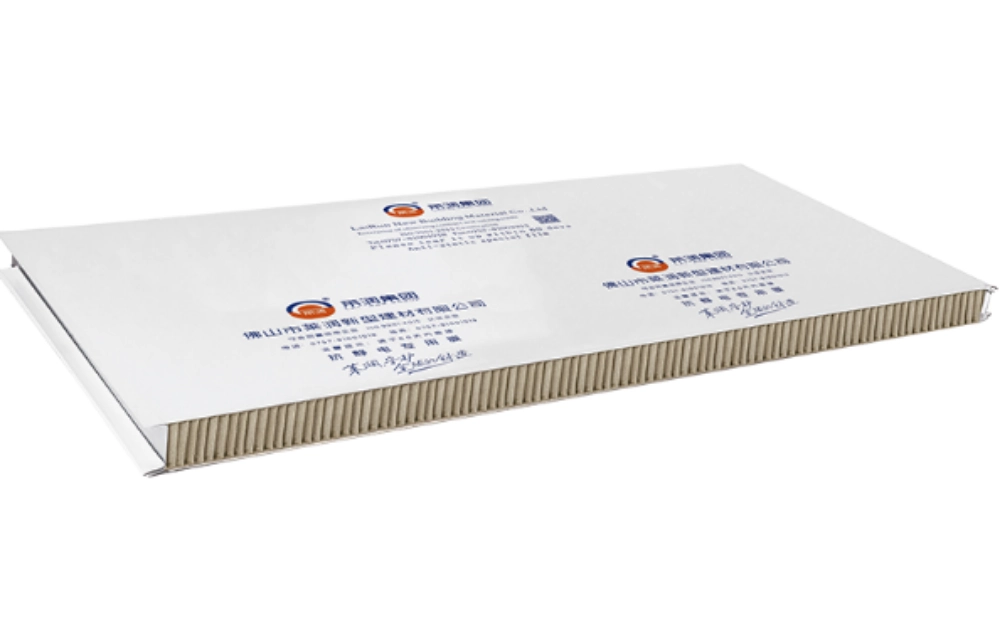
A useful sample review includes a full-size corner, a wall joint, and at least one opening detail. Small samples can show surface finish, but they cannot prove long-run flatness.
Transport and Storage Risks
Honeycomb panels should be protected from edge impact, uneven stacking, and moisture exposure before installation. A flat panel can be damaged by poor handling before it reaches the cleanroom site.
Marking the panels, using stable pallets, and inspecting the first delivery before full installation helps prevent defects from being discovered after walls are already assembled.
Panel Approval Should Match the Site Environment
Test the honeycomb panel with the profiles and supports that will be used on site. Flatness is influenced by the panel itself, but joint compression, frame alignment, fastener spacing, and the length of the installed run determine whether small tolerances accumulate into a visible wave.
Cleanroom conditions should be translated into wall requirements before the core is finalized. Washdown frequency, humidity, impact exposure, fire review, thermal difference, and mounted accessories all affect whether honeycomb construction is appropriate and how the edges must be detailed.
Storage can change the condition that installers receive. Specify flat support, protected edges, dry staging, and limits on uneven stacking so transport or site handling does not introduce bow that is later mistaken for a bonding defect.
Project Confirmation Questions
What finished wall height, panel span, thickness, and joint profile are planned for the longest uninterrupted run?
Which room conditions create the largest risk: washdown, humidity, impact, temperature difference, or fire requirement?
How will door frames, windows, service penetrations, and exposed honeycomb edges be closed and sealed?
What delivery sequence and storage method will keep panels flat before they are installed?
Flatness Problems Usually Become Visible After Installation Starts
Honeycomb sandwich panel flatness depends on skin bonding, core consistency, storage support, and how the panel is fixed into the wall system. A short sample may look acceptable while long panels reveal bow, twist, or local skin waves.
Core bonding should be considered alongside cleaning and sealing needs. If a modular cleanroom wall faces frequent wipe-down, door vibration, or equipment contact, weak bonding can show up as local drumming, skin movement, or joint misalignment.
Installation teams should check panel sequence and support points before work begins. Large panels moved through narrow corridors or stored upright without support can develop handling damage that looks like a manufacturing defect.
The best approval record compares surface flatness, joint fit, edge sealing, profile compatibility, and installed appearance. This gives both production and site teams a shared standard.
For modular rooms, the panel delivery sequence should match the installation plan. Reducing unnecessary movement lowers edge damage and helps long panels keep their intended flatness.
Large wall runs should be checked under side light. Small waves, skin movement, or uneven joints are easier to find before final sealing than after equipment and trim are installed.
Review several connected panels in a mock-up rather than approving only one flat sample. Joint fit, profile straightness, and cumulative skin/core tolerances become much easier to see when the wall extends across multiple modules.
Record the condition of panels when they are unpacked. Edge dents, uneven stacking, moisture exposure, and long unsupported storage can influence flatness before installation begins, so incoming inspection should separate handling damage from manufacturing variation.
Penetration details deserve their own acceptance check. A flat wall can still fail cleanroom expectations if pipe, cable, window, or door interfaces create open edges, uneven sealant lines, or surfaces that are difficult to wipe down.
Core choice should follow the room’s ranked risks. Honeycomb can offer a useful stiffness-to-weight balance, but a project dominated by fire, heavy impact, thermal insulation, or repeated washdown may place greater weight on other panel constructions.
Installation records should capture support alignment, panel orientation, joint material, sealant, and any local reinforcement. This information helps maintenance teams diagnose future movement without assuming every visible line is a panel-bonding defect.
The final flatness decision belongs to the installed system. Panel face quality, support accuracy, profile geometry, storage history, and installation sequence should all meet the same visual and dimensional acceptance plan.
Long-Wall Flatness Needs Joint and Support Control
Wall flatness is cumulative. A small bow in one panel, a profile that is slightly out of line, or a support frame that varies along the room can become a visible wave after several panels are installed. The mock-up should therefore include multiple joints and enough length to show whether tolerances accumulate. Checking only one panel on a flat table cannot reveal this system effect.
Storage and conditioning also matter before installation. Panels stacked unevenly or exposed to moisture and temperature differences may change shape before they reach the wall. Delivery instructions should specify flat support, edge protection, and any site-conditioning requirement. If panels are installed immediately after unfavorable storage, the resulting distortion can be misdiagnosed as a manufacturing defect.
During installation, record frame alignment, panel orientation, joint compression, and sealant application at openings. This creates traceability when a section later shows a gap or shadow line. More importantly, it lets the team distinguish panel bow from support or profile error and correct the real cause rather than replacing good material.
FAQ
Why do honeycomb sandwich panels sometimes show waves?
Waves can come from uneven bonding, handling damage, inadequate support, or stress during installation. Large panels should be checked for flatness before final assembly.
Are honeycomb panels suitable for cleanroom partitions?
They can be suitable when the project needs low weight, stiffness, and clean surface appearance. Fire, humidity, impact, and joint requirements still need project-specific confirmation.
What is the most important sample check for honeycomb panels?
Flatness, edge condition, and joint fit are essential. A small material sample is not enough for long wall runs.
Judge Flatness Across the Installed Wall, Not One Sample Panel
Use the wider honeycomb sandwich panel category only after the project has defined wall height, support spacing, openings, joint profile, washdown exposure, storage sequence, and the flatness limit that will be checked after installation.
