



Sandwich Panels for Dairy Processing Plants: How to Choose Hygienic Wall and Ceiling Panel Suppliers
Time : October 09, 2026 View : 534
Dairy processing rooms place several demands on a wall system at the same time: cleanable surfaces, controlled temperature, protected joints, service openings, and a construction sequence that does not leave hidden moisture paths. A panel supplier should therefore be evaluated through the full room detail, not only a core material or a catalogue photograph.
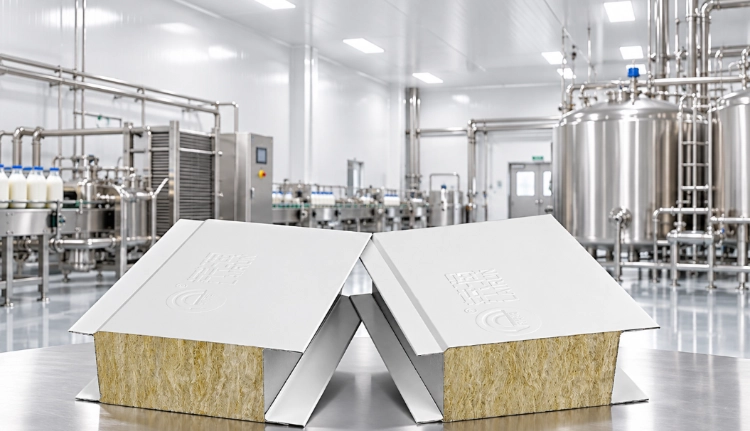
Dairy facilities impose a different duty on sandwich panels than dry warehouses. Repeated washdown, temperature differences, condensation risk, cleaning chemicals, food-zone detailing, and cold-room interfaces all need to be addressed before the panel thickness is finalized. Buyers should evaluate a supplier on the build-up of the entire envelope—including skins, core, joint geometry, sealants, trims, bases and penetrations—rather than comparing panel price per square meter alone. LAIRUN’s rock wool sandwich panel range can serve as an official product reference for discussions about fire and insulation requirements.
Key Takeaways
- The decision should be based on the operating duty and the buyer’s acceptance test, not on a broad “high quality” label.
- Separate the continuous requirement from short peaks, exceptions, maintenance access, and the conditions that can change after installation.
- Rock Wool Sandwich Panel is a suitable official reference for this topic, but its exact configuration and limits still need confirmation for the project.
Buyer / Engineering Checklist
|
Selection factor |
Dairy-plant requirement |
Verification |
|
Washdown exposure |
Resistance to water and cleaning chemicals |
Coating data + sample test |
|
Thermal performance |
Cold-room or process-zone insulation target |
Panel thickness and thermal data |
|
Fire strategy |
Core behavior and local code requirement |
Applicable fire test documentation |
|
Hygienic detailing |
Sealed joints, corners, bases and penetrations |
Shop drawings and installation method |
1. Define the Real Operating Requirement
Before comparing equipment, define the operating question behind sandwich panel suppliers for dairy processing plants. Buyers often begin with a product name, but the real requirement is usually a boundary: a load must stay within a limit, a surface must remain clean, a mixture must reach a repeatable state, or an enclosure must fit a service route. Write the normal condition, the peak condition, the exception, and the result that will be accepted. Start with the site or process data that changes the selection: load curve, material, temperature, traffic, room class, duty cycle, or service route.
Write the target in measurable terms and name the instrument or observation that will prove it. The detail matters because a catalogue value is measured under a stated condition, while the real project has its own operating limits, duty cycle, environment, interfaces, and acceptance criteria.
Use a short requirement sheet with the target, the measurement method, the duty cycle, and the excluded use. This makes the next conversation with LAIRUN specific and gives other suppliers the same starting point.
2. Understand the Technical Mechanism
The working mechanism links input conditions, control logic, the active component, protection, and the final measured result. In practical terms, the system is a chain rather than a single component. Input conditions, control logic, the working part, protection, and the final measurement all influence the result. If one link is changed, the specification may need to change with it.
Small details such as timing, sensor position, clearance, communication loss, surface condition, or cleaning method can change the outcome. A useful technical review therefore asks what happens at start-up, during a normal cycle, at the limit, and after an interruption. It also asks which signal, sensor, material property, or installation detail tells the operator that the process is still inside the intended window.
The buyer should ask what the system does at start-up, at the limit, after an interruption, and when an operator uses the manual procedure. This is where a B2B article should help: not by promising a universal outcome, but by showing the checks that let an engineer reproduce a good outcome at a real site.
3. Match the Product Configuration to the Application
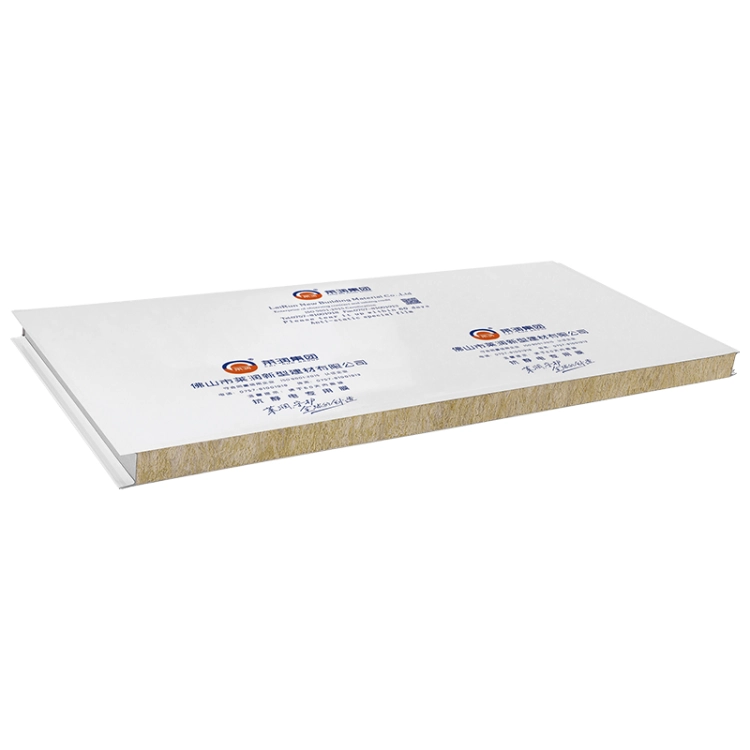
Review the concrete Rock Wool Sandwich Panel alongside the application requirement. Confirm the current product name, dimensions, materials, interfaces, operating range, and the assumptions behind any capacity or performance statement. If the page describes a family, ask which configuration is included in the quotation.
Product identity is verified through the official page, while performance is confirmed through the current datasheet, sample, drawing, and test. For a useful comparison, record the selected configuration in a table or marked drawing. Include the working part, controls, protection, access space, utility connections, cleaning or maintenance method, and the point where the buyer measures acceptance.
The product image below is an identity reference, not a substitute for a current datasheet, drawing, sample, or site test. Keep the source link in the purchasing file so a later reviewer can distinguish the selected product from a similar-looking item.
4. Compare the Important Trade-offs
The main trade-off is rarely “good versus bad”; it is usually capacity versus access, speed versus heat, density versus serviceability, or softness versus cleanability. That trade-off should be written into the specification. A compact footprint can reduce civil work but limit access. A high output can shorten a cycle but increase heat, current, wear, or quality variation. A softer material can improve handling but change cleaning or durability. The correct choice depends on which limitation the operation can control.
The safest specification states the limitation and the verification method instead of turning a typical value into a promise. Do not convert a general benefit into an unsupported guarantee. Ask for the test method, sample condition, tolerance, and maintenance assumption. If the manufacturer cannot confirm a number for the exact configuration, use a verification instruction in the purchase order.
Also define the out-of-scope condition. A product selected for ordinary conditions may need a different enclosure, coating, cooling method, safety device, or control strategy in corrosive, dusty, hot, cold, wet, high-cycle, or regulated environments.
5. Validate the Selection Under Real Conditions
Run a representative check before final approval. Use a representative sample, load profile, installation condition, or operating scenario that matches the application. Record the starting condition, the instrument, the cycle or operating time, the result, and any visible defect.
Use an exception test that matches the real risk. A perfect demonstration proves less than a controlled test at the difficult edge. Commissioning should include the uncomfortable cases: a restart after power loss, a blocked or dirty sensor, a change in ambient conditions, a short load surge, a partial batch, a communication timeout, or an operator using the manual procedure. These cases reveal weak assumptions earlier than a perfect demonstration.
Keep the approved sample, video, test sheet, and exception list with the order. If the equipment changes position or configuration after installation, repeat the affected test rather than relying on a verbal handover.
6. Lock the Documentation and Handover Scope
Request the documents that turn a purchase into an operable system: current datasheet, drawing, single-line or utility diagram where relevant, installation limits, spare-parts list, inspection points, packaging method, commissioning plan, training scope, warranty boundary, and contact route. Keep the commercial scope and technical scope together so civil work, utilities, controls, packaging, training, and after-sales duties are visible.
Use project guidance for product-family context, then ask LAIRUN to confirm the selected configuration through contact page. The useful response names what is included, what the site must provide, how faults are recovered, and which measurement signs off the result.
At handover, record serial or batch information, firmware or control settings where relevant, initial readings, alarms, cleaning or maintenance intervals, and the final approved operating limits. This file protects both the buyer and the supplier when the project is expanded or a new operator takes over.
Conclusion
The product choice is defensible when the operating requirement, configuration, test evidence, and handover records tell the same story. The practical route is to define the operating question, map the mechanism, select the concrete Rock Wool Sandwich Panel, test the difficult conditions, and preserve the evidence in the handover file.
For a project review, send the requirement sheet, marked layout, sample or load data, and acceptance test to LAIRUN. Ask for a written configuration and a clear list of assumptions before the order is released.
FAQ
Q1: What should be confirmed first?
A: Confirm the duty, site conditions, target result, and acceptance method before comparing products.
Q2: Is a catalogue specification enough?
A: No. Match it to the exact configuration and verify the measurement conditions.
Q3: Why include an exception test?
A: Faults and quality disputes usually appear at limits, not during a perfect demonstration.
Q4: What does LAIRUN need for a useful review?
A: Send the requirement sheet, layout, operating data, and the result that must be signed off.
Q5: What belongs in handover?
A: Include settings, readings, drawings, maintenance points, alarms, spare parts, and responsibility boundaries.
