



How Does Panel Joint Design Affect Air Leakage in Cold Storage Rooms?
Time : October 15, 2026 View : 514
The major part of air leakage in cold storage rooms does not start from the core of the insulation. In most cases the air leaks from a joint. A non-seated tongue, a small dent in a groove, unevenly pulled skin by a screw line or even a worn-out seal which looses contact at changes of temperature can be the starting point. Warm, moist air enters the cold storage room. The refrigeration machine runs harder, there is frost on the outside of the door and it takes longer to regain the temperature after opening a door.
img.How Does Panel Joint Design Affect Air Leakage in Cold Storage Rooms.webp
A practical way of looking at this is that the design of the panel joints determines the continuity of the airtight layer. Thus, good joints are those where the metal skins are held in alignment to provide a suitable compression region for the sealant or gasket and to limit movement between adjacent panels. Whilst the core is important, a very good core will not compensate for a very poor joint.
Key Takeaways
- A tongue-and-groove joint allows a defined overlap to be achieved by the installer and enables a repeatable sealing line to be created.
- Joint geometry should reflect panel thickness, corner detail, ceiling load and temperature range.
- The flat, square edges of a panel are as important as the nominal size of the panel.
- The greatest number of leaks are found through doors, corners, penetrations and service openings rather than long straight joint runs.
- Check the joint after assembly, the first cooling cycle, and later maintenance.
Why Joint Geometry Controls Air Leakage
The joints between panels form the boundary between the conditioned space and the rest of the building. A simple gap creates a region where air and water vapor under pressure difference can lead to condensation, ice along the joint, wet edges and reduced thermal performance.
Tongue-and-Groove Joints Create a Longer Air Path
The tongue-and-groove joint does more than align panels. It converts a simple straight joint into a longer interlocking joint. Where edges meet squarely, a joint can be sealed with a gasket, or with a suitable sealant, or with both. Such a joint also helps to stop panels from worked slipping out of handling contact with adjacent panels.
The LAIRUN Installation Details show Male & Female Splicing, Middle Aluminum Connection, Inner Arc Aluminum, Base Profile and Slot Aluminum for Floor/Wall Nodes. The cold room is not just the panel field. All connections for walls, floors, ceilings, doors and columns need to be properly detailed.
Compression Matters More Than a Thick Bead of Sealant
A joint that is too wide, twisted or dirty can not be compensated by a suitable sealant. A stable joint compresses the sealing material within a given range. If this range is not met, a leak path is created. Excessive compression, on the other hand, deforms the edge and creates a new gap next to the fastener.
Before assembly, check for straight edges and clean groove. Spacing of fasteners must be as per specification. Pulling one end tight while leaving the other open is not recommended. Although a light check may indicate any problems, such check does not substitute for a full pressure test or a smoke test where required.
How Temperature Movement Opens Small Gaps
A cold storage room is subject to a cycle of loading, defrosting, washing and maintenance. The temperature fluctuations in the room affect the skins, fasteners, sealants and profiles. Thus a joint closed at room temperature can open up when one panel contracts more quickly than the other.
Flatness and Edge Accuracy Set the Starting Point
The flatness error for magnesium oxysulfide on the LAIRUN product center is specified as 0.1 mm for that particular product. Note that this is a product specific figure and not a general tolerance figure for all panels. It does however highlight the point that a flatter, more accurately cut edge to the joint will allow it to maintain even pressure along its length.
Get the supplier to provide you with the actual figures for flatness, squareness and edge construction for the panels you are ordering and how they treat damaged edges. A small corner that has been crushed can easily get tucked under a trim profile and not be noticed until the panels leak after a few cycles of cooling.
Fasteners and Profiles Must Allow Controlled Movement
The fasteners join the skins together with the edge members, but over-tightening can create dimples in the panel face and open up the sealing line. Corner and base profiles must support the panels without creating a solid bridge which opens up the joint. The detail will depend upon the panel system, the span and the support conditions.
Keep one approved detail for wall-to-wall, wall-to-ceiling, wall-to-floor and panel-to-door frame conditions for several room sizes to prevent mixing of profiles from different systems by different teams.
Which Panel Features Help a Cold Storage Joint Stay Tight?
When cold storage buyers compare thermal insulation, they also compare the complete assembly and look at the core, the facing, the edge treatment and the joining method as a whole.
Rock Wool Panels Add Fire and Acoustic Performance
The LAIRUN Rock Wool Sandwich Panel is listed for cleanrooms and cold rooms. Its page specifies tongue-and-groove jointing, effective widths of 950 mm or 1,150 mm, thickness options from 50 mm to 200 mm, and rock wool density options from 60 to 120 kg/m³, with customization available. The same page describes A1-level fire performance, sound insulation, and heat insulation.
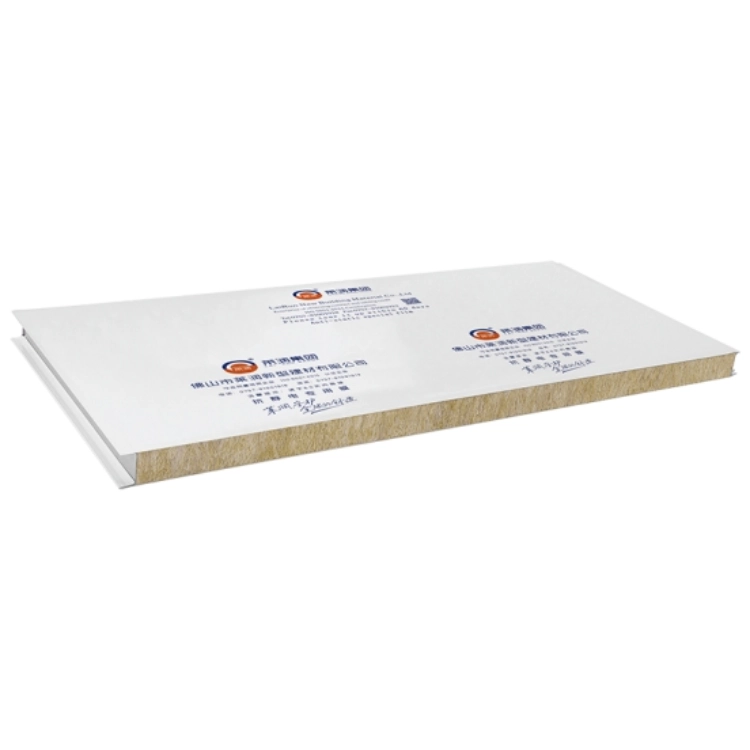
Additional considerations for cold storage rooms such as fire and noise could also be important. The thermal performance, skin type and seal detail all need to be checked against the design temperature. A fire performance profile will not compensate for a leaking edge seal detail.
Magnesium Oxysulfide Panels Address Moisture-Related Concerns
The LAIRUN magnesium oxysulfide panel is an alternative material to combat condensation and humid air. The official product information of this panel describes a tongue-and-groove design, water and moisture resistance, no halogen reversion and is available in various thicknesses from 50mm up to and including 200mm. The service life of this product is stated to be no less than 20 years. Again, this information refers to the above mentioned product and must be checked against the project requirements.
This option may be suitable for situations where the room is frequently washed down or has high humidity outside the room. Check the groove and keep the joint surfaces clean. Inspect the joint after the first pull-down.
Where Cold Storage Rooms Commonly Leak Air
Simple straight panel runs are easy to inspect. Leaks will generally occur where 3 or more components connect together or where another trade has cut the panel. A short check list can then highlight the greatest risk areas.
Five High-Risk Locations
- Floor-to-wall junctions: Uneven floors can cause the first panel to twist, leaving a continuous lower gap.
- Inside and outside corners: The Trim profiles can be hiding an open edge or missing seal.
- Ceiling suspension points: Rods, hangers, and access panels break the airtight layer.
- Door frames and thresholds: The faster wear here is due to the repeated impact against the door, and gasket wear.
- Pipe and cable penetrations: Oversized holes in walls and unsealed conduit through floors allow both air and vapor to enter.
A panel system typically consists of inner arc aluminum, base aluminum, H-shaped aluminum, T-shaped aluminum, door frames, drop seals and window profiles. These parts are all sealing parts and have to be treated with due care. Although a door leaf might be made up well in itself, a cold room door can still leak at the frame or drop seal.
How to Inspect Joint Airtightness Before Handover
Inspecting items in the same order as they were built makes sense. This enables one to determine whether a detected defect arose from a defective panel, from a subsequent error in assembly or from subsequent service work. The inspection also provides a valuable maintenance record subsequently.
A Practical Three-Stage Check
Stage 1 – Undertake a dry assembly check to check panel alignment, joint engagement, fastener seating etc. Also check for continuity of profile and visibility of sealant. Mark up any damaged edges prior to applying insulation.
Stage 2: Pressure or smoke check. The room is pressurized to the required pressure difference and all corners, door frames, penetrations and service openings are checked. It is surprising how a test can reveal a hidden path that would have otherwise been discovered by a visual inspection. Use the test method described in your project specification.
Cold-cycle recheck – Stage 3: After the first pull-down and one normal operating cycle, inspect all seams for signs of frost, dampness or a new leak. Record the room temperature at the time of inspection and note the exact location of any finding. A joint that passes the warm test but fails on cool down requires to be corrected prior to final acceptance.
A supplier can offer a more accurate quote if you supply the following information: room temperature, panel thickness, joint details, door quantity and penetration details. For a coordinated detail review for application support across various industries, refer to the LAIRUN solution center. For technical questions on product and after-sales service, refer to the LAIRUN service page.
A Buyer’s Checklist for Joint Design
Before you compare quotations, ask each supplier to state:
- Joint details for all nodes consisting of joint type and section drawing.
- the panel thickness, effective width, edge treatment, and facing metal;
- the sealing material, compression method, and compatible temperature range;
- the allowed flatness and squareness tolerances;
- the repair method for chipped edges and cut panels;
- the inspection method after installation and after the first cooling cycle;
- the responsibility for doors, profiles, penetrations, and replacement parts.
LAIRUN has 38,000 square meters of production space with 8 production lines that are near full automation and are capable of producing 25,000 square meters per day of cleanroom sandwich panels. The company has 25+ years of research and development experience in cleanroom sandwich panels and ships product to over 30 countries. We also have much more than just these panels at LAIRUN. Large production facilities and 25+ years of experience with cleanroom sandwich panel research and development are not, however, sufficient to ensure that a poor joint is made suitable.
For your project references, please find our LAIRUN case center and send your own panel schedule via our LAIRUN contact page. We need to know design temp/relative humidity, room dimensions, door locations, intended cleaning method and required fire performance. The more details you provide us, the better joint recommendation we can offer you.
FAQ
Q1: How does a tongue-and-groove joint help to prevent air leakage in a cold storage room?
A: By interlocking adjacent panels a defined compression zone is created for a good seal. Warm air has a longer and more tortuous path through the joint.
Q2: Can a thicker insulation core fix a leaking panel joint?
A: No. Core thickness affects heat transfer, but leakage through panel joints is a function of edge fit, seal compression, profiles and penetrations through the joint.
Q3: Which panel details should one check for cold rooms?
A: The tongue-and-groove edge, flatness, thickness, facing, corner profiles, floor connection and door-frame detail of the selected LAIRUN product.
Q4: How soon should a cold room joint be tested?
A: Test the joint after dry assembly for seal integrity at the design pressure, and then again after the first cooling cycle to allow for any movement related gaps to open up.
Q5: What information do you need to send to LAIRUN for a joint recommendation?
A: Provide design temperature, humidity, room size, panel thickness, door and penetration layout, cleaning method and required fire performance for a complete assessment of the assembly.
