



How to Prepare a Cleanroom Panel RFQ for Global Food and Healthcare Projects
Time : October 29, 2026 View : 221
When we speak of a cleanroom sandwich panel we are normally talking about a standard product that is offered by several suppliers. In many cases the published specifications appear to be comparable, but when it comes to the actual implementation of a facility, big differences can arise in relation to the core, the outer panels, the joining technique and the scope of services and scope of delivery, especially in cases where changes are made late in the process such as changes to doors, ceilings, openings or washdown zones.
For specific products LAIRUN has outlined the construction of the various products and corresponding published specifications, including rock wool panels, hollow core MGO panels, magnesium oxysulfide panels and MGO rock wool panels. The RFQ should consist of sufficient product detail for suppliers to quote based on the supplier’s own brochure but entered in the RFQ in a comparable format.
Start With the Room Function and the Cleaning Regime
The first part of the document should be used to describe the intended use of each room. Therefore it would describe a dry packing room, a wet processing room, a sterile support room and the corridors between them.
Describe Zones Instead of One Generic Panel
List each zone, its wall and ceiling area, and the conditions that affect the envelope:
- product or process handled in the room;
- expected temperature and humidity range;
- dry cleaning, foam cleaning, or pressure washing;
- contact with acids, alkalis, salts, oils, or disinfectants;
- required hygiene level and access frequency;
- equipment mounted on walls or suspended from ceilings.
For example, a washdown zone in a food processing facility would be specified differently from the dry warehouse areas, while a laboratory or isolation support room for healthcare would have different surface and joint specifications than the typical office corridor.
State What the Panel Must Not Do
The conditions the panel must withstand need to be clearly spelled out. Ask the supplier to clearly identify the proposed construction and state whether the proposed panel is designed to resist moisture, corrosion or withstand frequent cleaning. Make sure that general statements such as “waterproof” are accompanied by references to test methods, panel edge details and installation conditions.
LAIRUN’s solution center describes antimicrobial, fire-resistance, soundproofing, and heat-insulation use cases. Those descriptions can help structure questions, but the RFQ should still request evidence for the exact product and assembly.
Define the Panel Construction in a Comparable Format
Suppliers may use similar terms for products with substantially different constructions. Listing the panel construction in a consistent column format makes those differences easier to compare across quotations.
Specify Core, Facing, and Joint
Ask each bidder to provide:
- core material and nominal density, where applicable;
- panel thickness and effective width;
- external and internal facing material;
- coating or finish, including color and cleanability information;
- tongue-and-groove or other joint profile;
- edge treatment, trims, sealants, and corner details;
- maximum standard length and permitted tolerances.
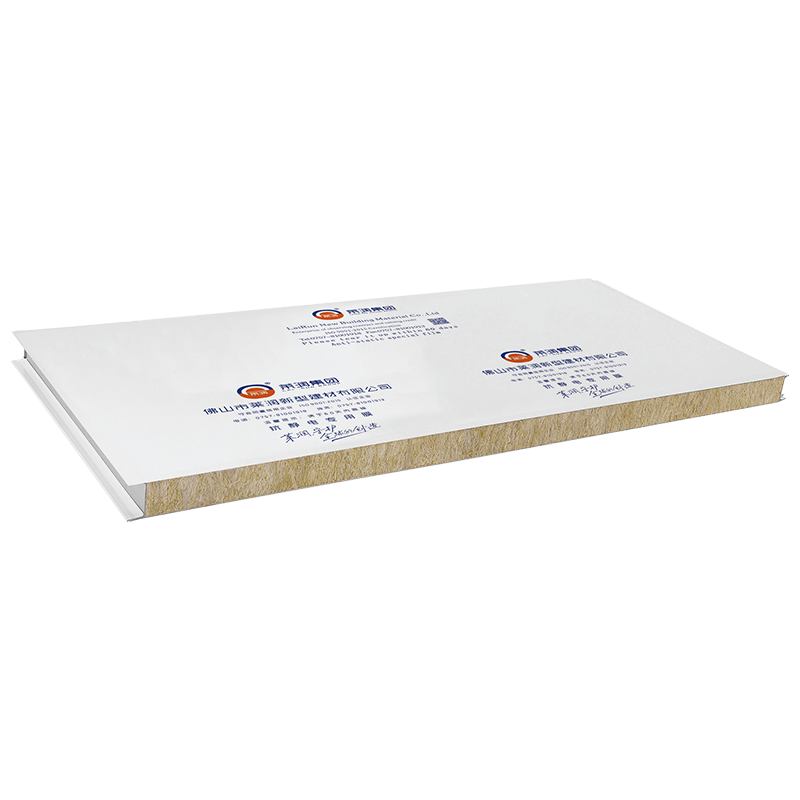
The current LAIRUN rock wool sandwich panel specification lists effective widths of 1,150 mm and 950 mm, thickness options from 50 mm to 200 mm or customization, and rock wool densities from 60 to 120 kg/m³ or customization. It also lists galvanized steel, stainless steel, aluminum alloy, aluminum-magnesium-manganese, and inorganic pre-coated board as facing choices. These are useful RFQ fields because they affect weight, detailing, and price.
The hollow core MGO panel specification describes a different construction. It specifies a 95 mm hollow-section spacing, male-and-female interlocking core joints, and top and bottom MGO boards of 5 mm plus 5 mm with 12 mm middle boards. A quote that simply says “MGO panel” is not enough; ask for the section and board build-up.
Separate Product Data From Assembly Data
To assess fire, hygiene, leakage and cleaning performance of the assembly, all other components of the wall must also be quoted. Panels can look cheap but when all associated items are added to obtain a complete installation solution, the total cost can be much higher.
A good RFQ would also outline the unit rates for other wall finish trims and opening details, and then list the square meter rate for the panels to price the complete installation solution.
Ask for Evidence That Matches the Proposed Product
Every supplier should be allowed to state “not available” instead of replacing a missing document with a broad claim. This makes the comparison safer.
Request Controlled Documents
For each proposed panel, ask for:
- technical data sheet with revision date;
- material and coating description;
- declared dimensions, density, and tolerances;
- fire or non-combustibility report with standard and specimen;
- acoustic or thermal data where those properties affect design;
- cleaning and chemical-resistance guidance;
- installation instructions and joint drawings;
- sample identification and traceability method.
LAIRUN’s product center shows the current product families, while individual specifications carry the more useful construction details. Link the requested evidence to the exact product name in the RFQ. Avoid accepting a report for rock wool as evidence for a magnesium oxysulfide panel.
Put Conditions Next to Numbers
A number without conditions can mislead. If a supplier states a fire period, ask for thickness, assembly, test standard, and orientation. If a supplier states thermal conductivity, ask for mean temperature and test method. If the project needs a cleanability claim, ask which facing and sealant were evaluated.
For example, LAIRUN’s MGO rock wool specification states that a 50 mm panel has a 74-minute fire-protection time and that its sound insulation meets ISO 717/82 and UNI 18270/7. Those statements belong to that product description. They should not be copied into a quotation for a different core without supporting evidence.
Include Logistics and Installation in the Same Request
Prioritize the sequence of required components to ensure all are delivered in time. If the building is ready to receive the panels but not the corresponding trims or doors, indicate this in the RFQ as well.
Request a Packaging and Storage Plan
Can the panels be delivered to site with protection against rain, impact and edge damage? Can you advise on the dimensions of the packaging, the loading limits of the truck and the unloading equipment? How long would it take for delivery of the panels and the completion of installation? Are there any covered and level storage areas for the panels on site?
LAIRUN presents installation support and after-sales service that can include guidelines, videos, or on-site support when needed. Put the same expectation in the RFQ so bids can be compared on actual support, not a vague “technical service” line.
Break Installation Into Handover Stages
List all the stages from survey to final handover of the completed room including who signs off each stage and what evidence of completion is handed over. Note that this will include stages where other contractors are responsible for completing work such as service openings through the supplied panels.
This becomes particularly important on larger projects with several contractors involved, such as food or healthcare projects where the panel supplier manufactures the panels whilst another contractor completes the service openings in the panels. Therefore it is essential that the interface between the contractors is clearly stated in the RFQ so that seals are not forgotten.
Use a Short Evaluation Sheet Before Award
Price should remain visible, but it should not be the only column. A compact evaluation sheet keeps the decision connected to the room’s risk.
Suggested Comparison Columns
Record each bidder’s response under:
- exact panel product and core;
- evidence completeness;
- surface and joint suitability for the stated cleaning regime;
- opening and trim scope;
- lead time and delivery sequence;
- installation and after-sales support;
- exclusions, assumptions, and valid quotation period;
- total installed cost.
Mark suppliers answering questions in an unclear manner as ‘clarification required’. Suppliers must quote for any approved ‘alternative’ products separately to their main quotation.
Use a Sample That Matches the Final Quote
The approval of a supplier to produce the exact panel product and core for your project should include the approval of a labeled sample of the core, facing, coating, thickness, joint and edges as referred to in the supplier’s quotation. The sample should be flat, the joints should fit properly, and the surface finish and edges should match the specification. The sample may not guarantee long-term performance but it will highlight any major discrepancies prior to commencement of production.
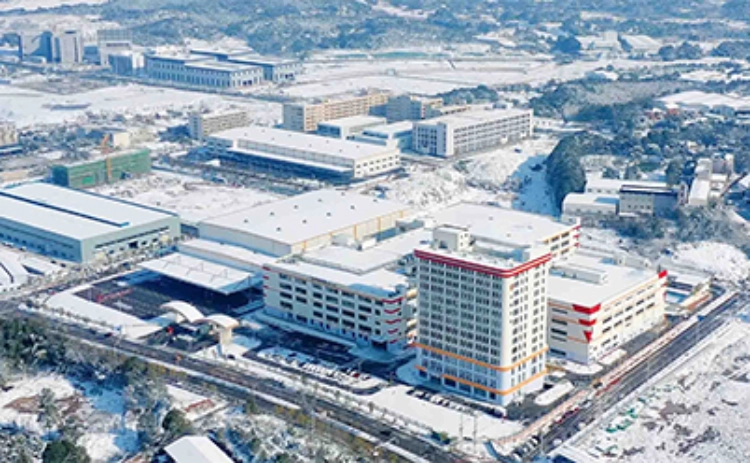
LAIRUN’s case center lists food, healthcare, laboratory, and chemical projects, including the 50,000 m² Dongpeng Beverage Changsha Base. A case reference helps you ask better questions about scope and coordination; it does not replace project-specific drawings or test documents.
Why This RFQ Format Helps You Choose LAIRUN or Another Supplier
Capacity figures alone are not sufficient to confirm a project’s production schedule. Here, the published figures are 38,000 m² of production area, eight lines and 25,000 m² per day. Also check the documentation, packaging and support of the supplier in detail for your specific project. Send the completed room schedule, panel matrix, drawings and evidence list to the contact people of LAIRUN or to other shortlisted suppliers and compare like with like.
The strongest award is therefore not “the supplier with the most features.” It is the supplier whose proposed construction answers your zone conditions, whose documents match the product, and whose installation scope leaves fewer gaps. Send the completed room schedule, panel matrix, drawings, and evidence list through the LAIRUN contact team or to other shortlisted suppliers, then compare like with like.
FAQ
What should a cleanroom panel RFQ state first?
State the room function, cleaning regime, temperature and humidity, chemical exposure, and wall or ceiling area before naming a panel core.
Can one panel type cover every food and healthcare room?
Not automatically; zone conditions and the complete assembly should determine whether one or several panel constructions are suitable.
Which LAIRUN panel details should be checked in a quotation?
Check the exact core, thickness, facing, joint, dimensions, accessories, and supporting reports against the relevant LAIRUN published product information.
How should fire or thermal numbers be compared?
Compare only values reported for the same product, thickness, assembly, test method, and conditions.
What prevents a low panel price from becoming a higher installed cost?
Request separate prices for trims, openings, sealants, doors, delivery, installation, testing, and exclusions before award.
