



How to Review Cleanroom Panel Samples Before Approving a Full Order
Time : October 30, 2026 View : 221
A cleanroom panel sample is a decision aid – not a showpiece. It allows you to check the surface, the joints, the edges, and the core of your chosen solution against the quotation before committing to production of thousands of square meters. Ensure that the sample approved for production carries an identification label. Inspect the sample against the same set of questions that you would ask when taking delivery of the finished panels.
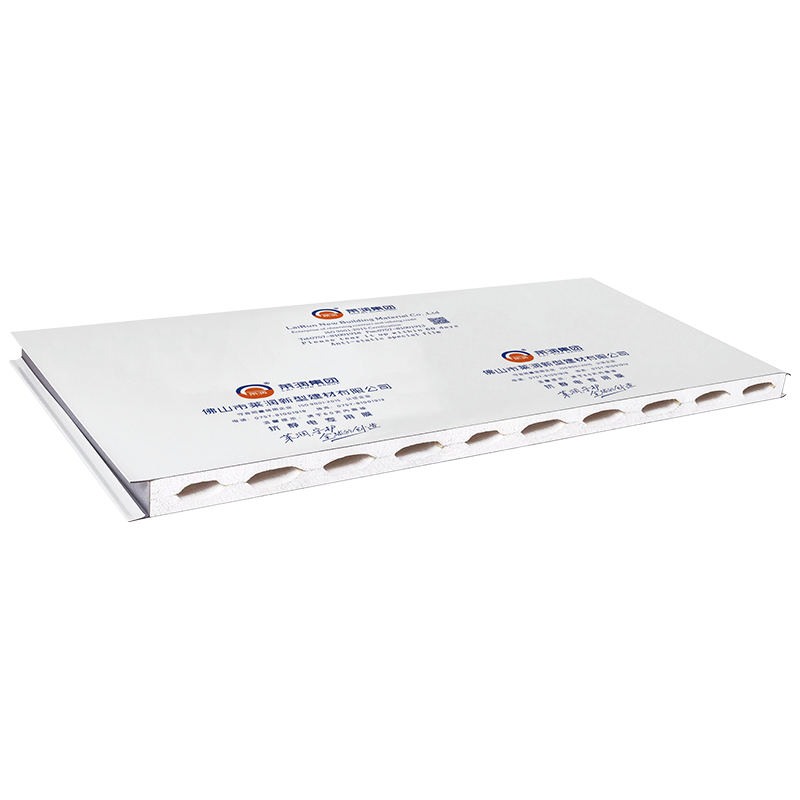
A bright white face can look wonderful but does not necessarily ensure that the rest of the panel has been specified and produced to a suitable quality. For laboratory, pharmaceutical, and high-tech clean rooms, a rock wool panel, a hollow core MGO panel, an MGO rock wool panel, a magnesium oxysulfide panel, or even thick paper honeycomb panels may all be under consideration. Each of these types of panel has different constructions, so approval of a sample must always specify the particular product under consideration such as a cleanroom rock wool panel rather than just approving a sample described as “cleanroom panel”.
Lock the Sample Identity Before You Inspect It
The first check is administrative. If the sample cannot be traced to the final quotation, visual approval has little value.
Put the Full Build-Up on the Label
The label should record:
- supplier and product name;
- core material and nominal density, where relevant;
- panel thickness and effective width;
- facing metal or board;
- coating or finish;
- joint profile and edge treatment;
- sample date, drawing number, and revision;
- intended wall or ceiling use.
Take photographs of both faces, the edge, the joint, and the label. Keep the sample in a dry, protected place. A small piece disappears quickly on a busy site, and later teams may not know which finish was approved.
LAIRUN’s product center lists several panel families that can look similar after painting. The label prevents a rock wool sample from being used to approve a magnesium oxysulfide order.
Match the Sample to a Controlled Drawing
Inspect the completed sample from all sides against a controlled section drawing showing faces, cores, joints, trims and sealants. Check that the sample supplied is complete and includes both faces. Establish whether the sample is a full-length panel or a site-cut sample and if the latter ask for a full factory-finished corner to be supplied in addition to the site-cut sample for inspection of the actual edge treatment.
The hollow core MGO specification describes male-and-female interlocking connections and a 95 mm hollow-section spacing. Those features should be visible or explained in the sample documentation when that product is proposed.
Inspect the Faces and Coating Under Realistic Light
The surface of the samples can be inspected for flatness and surface finish under normal daylight or with neutral white light, rather than against a strongly colored wall, which would give false results with respect to color.
Look for Flatness and Finish Consistency
Check for flatness by placing a straightedge on the face of the panel to check for any gaps. Also look for waves, dents, pinholes, scratches and any other blemishes. Check for any orange peel, gloss variation or other surface irregularities and also look for any signs of contamination. Check the panel at a low angle to reveal any shallow deformation that may not be visible when viewed from the front.
Consider a frequently wiped room. Try to wipe the surface with cleaning agents approved by the supplier. Check for any areas of looseness around folds in the panel and corners. Ask the supplier to identify the coating system and approved cleaning agents. A smooth surface is easy to clean but does not necessarily mean that surface is chemically resistant.
LAIRUN’s magnesium oxysulfide specification describes a flatness error controlled within 0.1 mm for its composite panel and a tongue-and-groove construction. Treat that as a published product claim to verify against the delivered sample and project specification, not as a universal value for every LAIRUN panel.
Check the Back Face and Hidden Areas
The back face of panels to be installed in service corridors to cleanrooms is important and should be checked for any exposed fibers, cut edges left unsealed, loose board pieces. Also check any holes drilled in the panel at the factory for any damage and ensure any inserts installed prior to shipping have not worked loose.
Test the Joint as a Small Assembly
Most cleanroom problems appear at interfaces rather than in the middle of an unbroken panel. The sample review should therefore include at least two joined pieces, a corner, and a representative trim.
Check Fit, Line, and Sealant Space
Join the sample pieces without forcing them. Check whether the tongue enters evenly, whether the face stays flush, and whether the joint line remains straight. Measure the visible gap if the drawing gives a target. Look for crushed edges or a joint that opens when the pieces are moved by hand.
Determine the manufacturer of the sealant to be used and the curing time of the sealant. Verify that there is sufficient space for the sealant bead and that it will not protrude from the face of the panel.
LAIRUN’s published service information describes installation guidance, videos, and possible on-site support. Use that support to resolve joint questions before production, especially when a local installer is unfamiliar with the selected profile.
Review Corners, Bases, and Ceiling Interfaces
Samples for review of the base trim, internal corners, external corners and the connection to the ceiling, including location of any reinforcement and service openings, should also be requested. All of these components form part of the overall cleanroom’s hygienic and structural envelope and should be reviewed as part of sample approval.
Do not approve a flat panel sample while leaving these interfaces “to be decided on site.” They are part of the hygienic and structural envelope.
Examine the Core and Edge Without Overinterpreting It
A cut section can answer useful questions, but it cannot replace a certified test report.
Confirm Core Continuity and Bonding
Inspect the cut edge for voids, delamination, uneven adhesive, or a core that stops short of the facing. Check whether the facing remains bonded when the edge is handled normally. Record defects with a ruler in the photograph.
For LAIRUN’s MGO rock wool panel, the published product information describes rock wool fibers arranged perpendicular to the metal face and a high-density strip layout. If that construction is specified, ask the supplier to show how the edge and joint preserve the stated build-up.
For a magnesium oxysulfide proposal check that published product information, covering material properties including moisture resistance and no halogen reversion, can be supported with current supplier documentation rather than inferred from a cut sample.
Keep Fire and Acoustic Claims Separate
The sample can confirm identity and workmanship. It cannot prove a fire period, smoke classification, acoustic rating, or thermal value. Ask for the report, specimen thickness, assembly, orientation, and test standard. LAIRUN’s MGO rock wool specification, for example, states a 74-minute fire-protection time for a 50 mm panel and references ISO 717/82 and UNI 18270/7 for sound insulation. Those figures should stay tied to that product and stated conditions.
Use a Small, Written Acceptance Record
An approval record should be short enough to use and precise enough to prevent argument.
Record Pass, Hold, or Reject
Use one line for each item:
- identification matches quotation;
- face finish and color;
- flatness and visible defects;
- edge and core condition;
- joint fit and sealant space;
- trim and interface details;
- dimensions and tolerances;
- documents received;
- deviations and corrective action.
Items that are acceptable but for which supporting documentation is missing should be marked as ‘hold’. Items that differ from the approved drawing should be marked as ‘reject’. It is strongly advised that photographs of the sample and corresponding signed record are distributed to all interested parties including the purchasing department, quality department, installation team and supplier.
Approve the Change Process Too
Even though a supplier may have alternative coatings, core densities, joints or trims available for construction of the sample panel, written approval must be obtained for any such variation before the change is incorporated into the sample panel.
LAIRUN’s case center shows projects in laboratories, healthcare, chemical, and food facilities. These references can help a project team ask about interfaces and installation, but they do not remove the need to approve the exact panel and finish for the current room.
When a Sample Is Ready for Full-Order Approval
Approve the full order only when all criteria for the full order approval have been met for the sample. That means the physical samples represent the same product as the controlled copy of the approved drawing, quotation and evidence packages. Include details of where the approved samples are stored, who can approve changes to the approved samples, and the nature of the inspection to be carried out on the first production batch of product.
This process gives LAIRUN and other qualified suppliers a fair, clear target. It also turns a subjective “looks good” decision into a traceable quality gate. A careful review of a labeled sample can help identify mismatched joints, damaged edges, or an unpriced interface.
FAQ
What should be checked before a cleanroom panel sample is approved?
Check identity, dimensions, face finish, edge, joint, trim, and supporting documents against the quotation.
Can a visual sample prove a panel’s fire rating?
No; a fire rating must come from a report for the exact product, thickness, assembly, and test conditions.
How does LAIRUN product identification reduce sample risk?
Naming the exact LAIRUN core, facing, thickness, and joint prevents similar-looking panel families from being mixed.
Should the sample include a corner and ceiling detail?
Yes; corners, bases, and ceiling interfaces often control cleanability and installation quality more than the panel center.
What happens when a supplier proposes a substitute after approval?
Place the change on hold, request a revised drawing and sample, and obtain written approval before production.
