



7 Specification Mistakes That Shorten the Life of a Honeycomb Sandwich Panel
Time : August 13, 2026 View : 1127
A honeycomb sandwich panel can stay flat, light, clean, and easy to install for years, but only when the specification matches the real job. Many early failures start before production. The panel is ordered with the wrong thickness, cell size, facing metal, coating, joint, or service condition. The first batch may still look fine. Trouble appears later as dented surfaces, open seams, corrosion marks, weak edges, or panels that no longer sit level.
The seven mistakes below focus on what you should check before approving drawings, samples, and purchase orders.

Mistake 1 Choosing Thickness by Price Alone
Panel thickness affects stiffness, thermal performance, handling, and the span that a panel can cover. Buying the thinnest option may lower the unit price, but it can raise framing, installation, and repair costs.
Match Thickness to the Panel’s Actual Duty
The thick paper honeycomb sandwich panel is available in 50, 75, 100, 125, 150, 175, and 200 mm thicknesses, with custom sizes also possible. Effective width options include 950 mm and 1150 mm. A 50 mm wall panel may suit a standard interior partition. A taller wall, wider unsupported area, ceiling section, or panel exposed to frequent impact may need a thicker build.
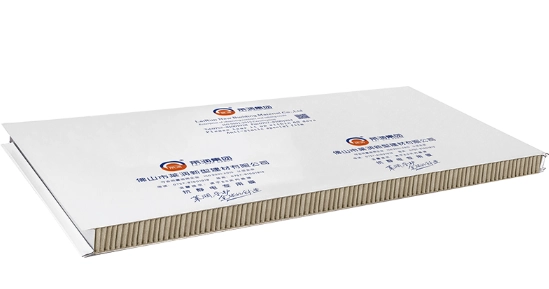
Before ordering, confirm:
- Wall or ceiling use
- Clear span and support spacing
- Door, window, and equipment openings
- Expected impact or maintenance traffic
- Required thermal and acoustic performance
A thicker panel is not automatically better. It simply gives you more structural depth. The right choice comes from the project layout, not a price list.
Mistake 2 Ignoring Honeycomb Cell Size
Paper honeycomb looks simple, but cell geometry changes how the core carries pressure. A buyer who specifies only “paper honeycomb” leaves an important detail open.
Select the Cell Size for Load and Surface Stability
Common cell sizes include 12 × 12 mm, 8 × 8 mm, and 5 × 5 mm. Smaller cells usually give the facing sheet more frequent support points. That can help limit local denting and improve surface stability, especially where a clean wall must keep a neat appearance under routine use.
Larger cells may still suit light-duty partitions, but the decision should consider the facing thickness and expected point loads. Ask for a sample when appearance is critical. Press around the center and near the edge. A small practical check often tells more than a glossy brochure.
Mistake 3 Using the Wrong Facing Metal
The honeycomb core may remain sound while the surface fails first. Scratches, corrosion, chemical staining, and repeated cleaning can all shorten useful life.
Choose the Skin for the Cleaning and Corrosion Risk
Available facing options are galvanized steel, stainless steel, aluminum alloy, aluminum-magnesium-manganese sheet and inorganic pre-coated board. The coatings used for the surface are polyester, fluorocarbon, high weather-resistant resin and other baked coatings.
Your choice should follow the room:
- Galvanized color-coated steel for common clean interior walls
- Stainless steel for frequent washing or stronger corrosion resistance
- Inorganic pre-coated board for selected medical, laboratory, or decorative clean areas
- More durable resin finishes where chemicals, sunlight, or hard cleaning are expected
You can review other cleanroom panel materials before fixing the facing. Do not copy the same skin specification across every room. A dry packing area and a wash-down area rarely need the same surface.
Mistake 4 Treating Moisture as a Minor Detail
Paper honeycomb is a lightweight and resource-efficient core, yet it is still paper-based. Moisture control matters from factory packing to final operation.
Control Water at Storage, Joints, and Openings
The panel should stay dry during transport and site storage. Keep packs above the floor, cover them from rain, and avoid trapping condensation under plastic sheets. Once installed, weak points often appear around cut edges, service penetrations, window openings, and unfinished joints.
Specify sealed edges and neat factory openings where possible. Site cutting creates dust, rough edges, and more places for moisture to enter. It also makes the job slower. A panel can be strong in the middle and still fail from one badly finished opening. That is not unusual.
For projects with demanding humidity conditions, compare core choices through LAIRUN’s cleanroom solutions rather than assuming paper honeycomb suits every zone.
Mistake 5 Leaving Joint Details Until Installation
A panel system is only as reliable as its connections. Poor joint planning leads to visible gaps, air leakage, dirt traps, loose edges, and repeated site adjustments.
Specify Tongue-and-Groove Connections Early
The product uses tongue-and-groove jointing. This connection helps panels align quickly and creates a cleaner continuous surface. It also reduces the amount of cutting and correction needed on site.
Your drawings should show:
- Joint direction
- Corner profiles
- Floor and ceiling connections
- Fastener spacing
- Sealant type
- Door and window interfaces
- Service penetration details
Do not write “install as required” and leave the rest to the crew. That phrase saves drawing time and spends money later. LAIRUN can provide installation and technical support through guidelines, videos, consultation, or site support when needed.
Mistake 6 Ordering Lengths without Checking Handling
Long panels reduce horizontal joints, but they also create lifting, transport, access, and deformation risks. The normal product length can be made to project needs, commonly up to 6000 mm.
Balance Joint Reduction with Site Reality
Before approving long sheets, check truck access, unloading space, corridor width, lift size, turning radius, and indoor storage. A six-meter panel is useful only when it can reach the installation point without damage.
Also check whether two installers can control the panel safely. Paper honeycomb panels are lighter than many traditional composite panels, but a wide, long sheet can still flex during handling. Use proper lifting points. Do not drag the surface across the floor or stack tools on finished panels.
Factory-cut dimensions can reduce waste and keep edges cleaner. LAIRUN operates automated production lines and supports customized panel sizes, material selection, and project planning. More information about its production background is available on the LAIRUN company profile.
Mistake 7 Approving a Panel without Performance Priorities
Buyers sometimes request fire resistance, sound control, thermal insulation, impact strength, corrosion resistance, low weight, and the lowest price in one sentence. Those goals do not always point to the same specification.
Rank the Requirements before Comparing Quotes
Start with the top three performance needs. For a clean interior partition, low weight, flatness, quick installation, and easy cleaning may come first. For another room, moisture resistance or fire classification may be more important.
The paper honeycomb structure uses kraft paper formed into regular hexagonal cells and bonded between two facings. This geometry creates a lightweight load-bearing core. The finished panel can also provide sound insulation, thermal insulation, scrub resistance, acid and alkali resistance, and rust resistance, depending on the chosen facing and coating.
Still, ask for clear test data that matches the offered build. Do not apply a fire result from another core material to paper honeycomb. Do not assume a surface coating result covers every chemical. The final specification should name the core, cell size, thickness, facing, coating, width, length, color, joint, and required tests.
LAIRUN has a 38,000 m² production base, multiple automated lines, and a stated daily capacity of 25,000 m². Its panel range serves cleanroom projects in electronics, semiconductors, laboratories, healthcare, pharmaceuticals, food production, and related controlled environments. For a project review, drawings and operating conditions can be sent through the contact page.
FAQ
Q1: What Thickness Should You Choose for a Honeycomb Sandwich Panel?
A: Choose thickness from the span, support spacing, wall height, ceiling load, thermal target, and impact risk. Standard options from LAIRUN include 50 to 200 mm, plus custom thicknesses.
Q2: Is a Smaller Honeycomb Cell Always Better?
A: No. Smaller cells can give the facing more support, but cost, weight, skin thickness, and real loading also matter. LAIRUN offers 12 × 12 mm, 8 × 8 mm, and 5 × 5 mm cell options for different project needs.
Q3: Can Paper Honeycomb Panels Be Used in Humid Rooms?
A: They need careful moisture control, sealed edges, and suitable surface materials. For high-humidity or wash-down areas, LAIRUN should review whether another core is a safer choice.
Q4: Why Is Tongue-and-Groove Jointing Important?
A: It helps align panels, speeds installation, and supports a clean continuous surface. LAIRUN can also help review corner, ceiling, floor, door, and window connection details.
Q5: What Information Should You Send before Requesting a Quote?
A: Send panel use, project area, thickness, width, length, cell size, facing metal, coating, color, joint type, drawings, humidity, cleaning method, fire needs, and delivery schedule. LAIRUN can then match the quotation to the actual job.
