



Can MGO Rock Wool Sandwich Panels Really Handle 1000°C Fire in Cleanroom Projects
Time : July 03, 2026 View : 948
From the perspective of fire safety, the certificate for a cleanroom is not just something to be checked at the time of installation. After the initial approval by the authorities, the fire safety of a cleanroom has a significant impact on the daily activities of the users, on the approval processes for equipment and other services, on the review of the insurance conditions and on the long-term risk of a project. For spaces such as laboratories, hospital rooms, food processing plants, electronics workrooms and biopharmaceutical cleanrooms, the wall panels are part of the fire safety system. The core of the wall panels must not burn, melt, drip or lose strength too quickly. Even if the installation of a cleanroom has been approved by the authorities, it can still fail in practice if the core of the wall panels is not suitable.
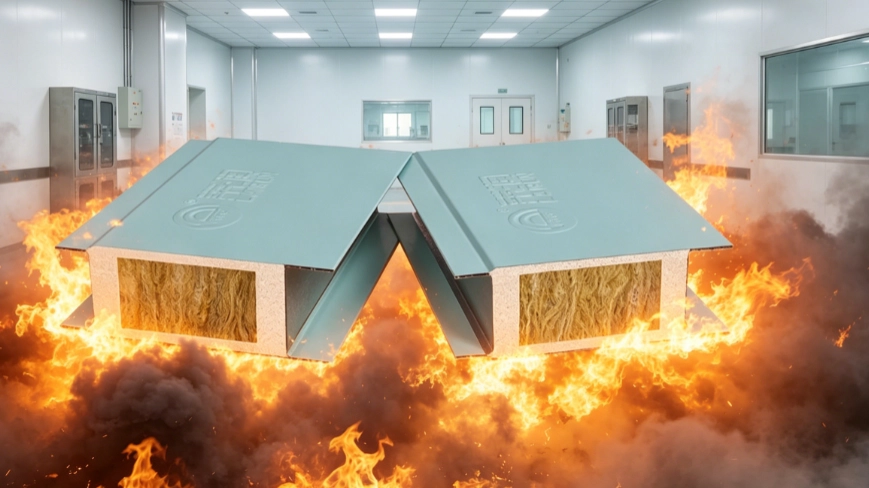
That is why many buyers ask a direct question before placing an order: can MGO rock wool sandwich panels really handle 1000°C fire? The short answer is yes, if the panel uses the right rock wool core, correct board structure, proper metal surface, and reliable jointing system. A number alone does not tell the whole story. The product structure matters more.
Why Does 1000°C Fire Resistance Matter for Cleanroom Panels?
A cleanroom may look simple from the outside, but its wall system usually carries more responsibility than a normal interior partition. It needs to resist fire, keep shape, reduce noise, support insulation, and still stay clean enough for daily production or testing work.
Fire Risk Is Different in Controlled Spaces
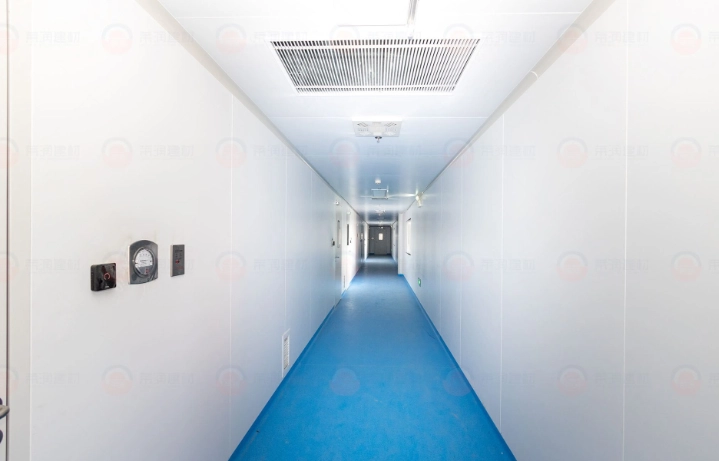
Cleanroom projects often include electrical equipment, HVAC systems, ceiling frames, lighting, pipes, and sometimes temperature-sensitive processes. In a laboratory or medical space, a wall panel cannot be chosen only because it is smooth and easy to clean.
Fire performance becomes more serious in:
- Hospital clean areas
- Research laboratories
- Electronics and semiconductor workshops
- Food and beverage production rooms
- Pharmaceutical cleanrooms
- Medical device workshops
The solution center shows why cleanroom panels are usually judged by several functions together, such as fire resistance, soundproofing, heat insulation, and antimicrobial needs. This is close to real project selection. Nobody buys wall panels for one reason only.
1000°C Is a Useful Safety Reference
On the LAIRUN product page, the rock wool core used in the MGO rock wool sandwich panel is described as A1 grade non-combustible material, with fire resistance above 1000°C. The 50 mm thick panel has a fire protection time of 74 minutes.
For buyers, this means the panel is not just “fireproof” in a loose marketing way. It has a clear fire performance reference. In a tender document, those numbers are much easier to discuss than vague words like “good fire resistance.”
Cleanroom Fire Safety Also Needs Stable Joints
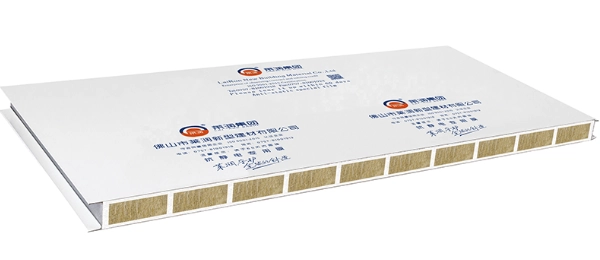
A panel core may perform well, but weak joints can still become a problem. LAIRUN uses tongue-and-groove jointing for this panel. This structure helps panels connect faster and tighter, which is useful for cleanroom walls where dust traps and loose seams are not welcome.
A small seam problem may look minor on day one. After cleaning, vibration, or temperature change, it can become a real maintenance issue. This is the kind of detail site teams usually care about, even if it is not always written loudly in the brochure.
What Makes MGO Rock Wool Panels Resist Fire Better?
The fire resistance of this panel does not come from one layer. It comes from the combined structure of rock wool, MGO board, metal surface, adhesive process, and panel jointing. When these parts work together, the panel can serve as a cleanroom wall and a fire-resistant insulated panel at the same time.
A1 Non-Combustible Rock Wool Core
Rock wool is made from basalt as the main raw material. It is melted at high temperature and formed by high-speed centrifugal equipment. This gives it non-combustible behavior, heat insulation, and sound absorption.
LAIRUN’s product information lists rock wool density options of 60kg/m³, 80kg/m³, 100kg/m³, and 120kg/m³, with customization available. Higher density can help with strength and acoustic performance, but it should still match the project budget and wall load. Do not choose density blindly. It needs to fit the wall height, ceiling design, and fire rating target.
Perpendicular Fiber and Staggered Strip Layout
The panel uses rock wool fibers placed perpendicular to the metal panel. High-density strip rock wool is staggered along the board length. This structure helps the panel keep better load-bearing capacity.
This is important because fire resistance alone is not enough. Cleanroom panels still need to stay firm during installation and use. In some projects, panels are cut around doors, windows, return air openings, or service holes. A stronger inner layout gives the system a better base.
MGO Board Adds Fire and Surface Stability
The product structure includes MGO board, with top and bottom MGO board thickness listed as 5mm + 5mm, and a middle board of 12mm for each piece. This layered structure improves fire performance and gives the panel a stable board surface.
For buyers comparing options in the product center this is one reason MGO rock wool panels are often considered for high-standard cleanroom walls, not just general partitions.
Where Are MGO Rock Wool Sandwich Panels Better Used?
Not every cleanroom needs the same panel. Some spaces care more about moisture. Some care more about fire. Some care about sound control because equipment noise is annoying after a while. MGO rock wool panels are strongest when the project needs fire resistance, strength, sound insulation, and heat insulation together.
Laboratories and Medical Clean Areas
Laboratories and hospital areas often need clean surfaces, stable walls, and a safer fire protection level. LAIRUN’s product page lists related cases such as Guangzhou Medical University New Campus Phase II, where magnesium oxide rock wool sandwich panels and mechanically processed panels were used in laboratory-related buildings.
For lab projects, the panel surface also matters. You may need galvanized steel sheets, stainless steel sheets, aluminum alloy sheets, aluminum-magnesium-manganese sheets, or inorganic pre-coated boards. The surface material should match the cleaning method and chemical exposure level. This part is sometimes missed in early quotation, then it comes back as a change order later.
Food and Daily Chemical Workshops
Food production needs clean joints, easy cleaning, mold control, and safe wall materials. LAIRUN’s knowledge base notes that MGO rock wool panels can be moisture-proof, mold-resistant, hygienic, and suitable for food factory cleanroom needs.
Rock wool also offers better sound insulation than many lighter core choices. In a food factory with compressors, packaging lines, and HVAC noise, that is not a small extra benefit. Workers may not talk about acoustic standards every day, but they notice the noise.
Electronics and Semiconductor Rooms
For electronics and semiconductor projects, panel stability matters a lot. LAIRUN’s knowledge base mentions a semiconductor project using 50 mm rock wool handmade sandwich panels and 100 mm glass-magnesium rock wool handmade sandwich panels, with 0.476 mm color-coated steel plates on both sides.
That detail is useful for procurement teams. It shows that one project may use different thicknesses in different areas. A 50 mm wall may be enough in one section, while 100 mm is selected for stronger insulation or stability elsewhere.
How Should You Choose Thickness and Density?
The product can be supplied in 50mm, 75mm, 100mm, 125mm, 150mm, 175mm, 200mm, or customized thickness. Effective width can be 1150mm or 950mm, and length can follow user requirements, normally within 6000mm. These numbers give you flexibility, but they also mean you need to decide based on project conditions, not only price.
50mm Is Practical for Many Cleanroom Walls
A 50 mm MGO rock wool sandwich panel is already a strong option for many cleanroom walls. The product page gives a 74-minute fire protection time for 50 mm thickness. For standard cleanroom partitions, this can be enough when the wall height, fire code, and layout are not extreme.
It is often a practical starting point for:
- General cleanroom partitions
- Food processing walls
- Laboratory room divisions
- Hospital support spaces
- Electronics workshop areas
75mm to 100mm Works Better for Higher Requirements
When the cleanroom has higher fire, sound, or insulation needs, 75 mm or 100 mm may be safer. This is also common when the wall is taller, equipment vibration is stronger, or the buyer wants a more solid wall feel.
The knowledge base also mentions that tongue-and-groove cleanroom panels can offer 50 mm, 75 mm, and 100 mm options, with customization available. For B2B buyers, that is useful because project rooms are rarely identical. One project may need several thicknesses.
Density Should Match Fire and Acoustic Goals
Rock wool density options include 60kg/m³ to 120kg/m³. Higher density is not always needed, but it may help where sound insulation, impact resistance, and load performance are more important.
A simple selection rule:
- 60kg/m³ to 80kg/m³ for common partition use
- 100kg/m³ for stronger wall feel and better acoustic control
- 120kg/m³ for higher load or stricter performance needs
The final choice should still follow the project drawing and local acceptance standard. Cheap panels look good on a spreadsheet. Bad panels look expensive after installation.
Why Choose LAIRUN for Fire-Rated Cleanroom Panels?
Supplier capability matters because fire-rated panels are not just raw material. Stable production, cutting accuracy, inspection, delivery, and technical support all affect the finished cleanroom.
Production Scale Supports Large Projects
LAIRUN has a 38,000 square meter factory area, high-automation production lines, and a daily output of 25,000 square meters. Its knowledge base also mentions production teams covering R&D, manufacturing, sales, and after-sales service.
For large cleanroom projects, this helps reduce the risk of mixed batches, slow delivery, or uneven product quality.
Quality Control Is Built Into the Process
LAIRUN’s uploaded company material mentions multiple quality inspection systems, testing support, and a standard system for purification panels. The company also works with testing institutions and holds quality and environmental management certifications.
For buyers, this does not mean you skip inspection. It means you have a clearer base for technical review, sample confirmation, and project acceptance.
Support Helps You Avoid Wrong Specifications
If you are not sure whether to choose MGO rock wool, rock wool, magnesium oxysulfide, or another panel, project consultation is useful. The service page covers customized solutions, material selection, technical support, and installation guidance.
For drawings, samples, or panel suggestions, the contact us page is the direct next step.
FAQ
Q1: Can MGO Rock Wool Sandwich Panels Really Handle 1000°C Fire?
A: Yes. LAIRUN’s MGO rock wool sandwich panel uses A1 grade non-combustible rock wool core material and is described with fire resistance above 1000°C. The 50 mm thick panel has a fire protection time of 74 minutes.
Q2: Is 50mm Thickness Enough for Cleanroom Fire Protection?
A: For many standard cleanroom partitions, 50 mm can be enough. But for higher walls, stricter fire ratings, stronger acoustic needs, or heavy-duty areas, 75 mm or 100 mm may be better.
Q3: What Rock Wool Density Should Be Chosen?
A: LAIRUN offers 60kg/m³, 80kg/m³, 100kg/m³, and 120kg/m³ options, with customization available. General partitions may use lower density, while higher fire, sound, or load requirements may need denser rock wool.
Q4: Why Is Tongue-and-Groove Jointing Useful in Cleanrooms?
A: Tongue-and-groove jointing helps panels connect faster and tighter. It reduces visible gaps, supports better sealing, and helps keep cleanroom walls easier to maintain.
Q5: Which Projects Are Suitable for MGO Rock Wool Sandwich Panels?
A: They are suitable for cleanroom projects that need fire resistance, sound insulation, heat insulation, and strong wall performance, such as laboratories, hospitals, food factories, electronics workshops, and pharmaceutical cleanrooms.
