



How Thick Should Rock Wool Sandwich Panels Be for Your Building Project?
Time : July 31, 2026 View : 1290
The panel thickness affects the heat transfer, the sound insulation, the perception of the solidness of the building, the transport weight, the mounting details and the costs. The thinnest possible system is often the best to buy. This system has to meet the fire, temperature, sound-insulation, hygiene and building requirements.
Most projects start with 50 mm, 75 mm, or 100 mm. Demanding envelopes may need 125 mm to 200 mm. The answer depends on location, temperature difference, support method, and test requirements.
What Thickness Options Are Common for Rock Wool Sandwich Panels?
First, separate the panel’s role from its core material. A cleanroom partition, exterior wall, and ceiling do different jobs. The same thickness can work well in one location and poorly in another.
When Is a 50 mm Panel Enough?
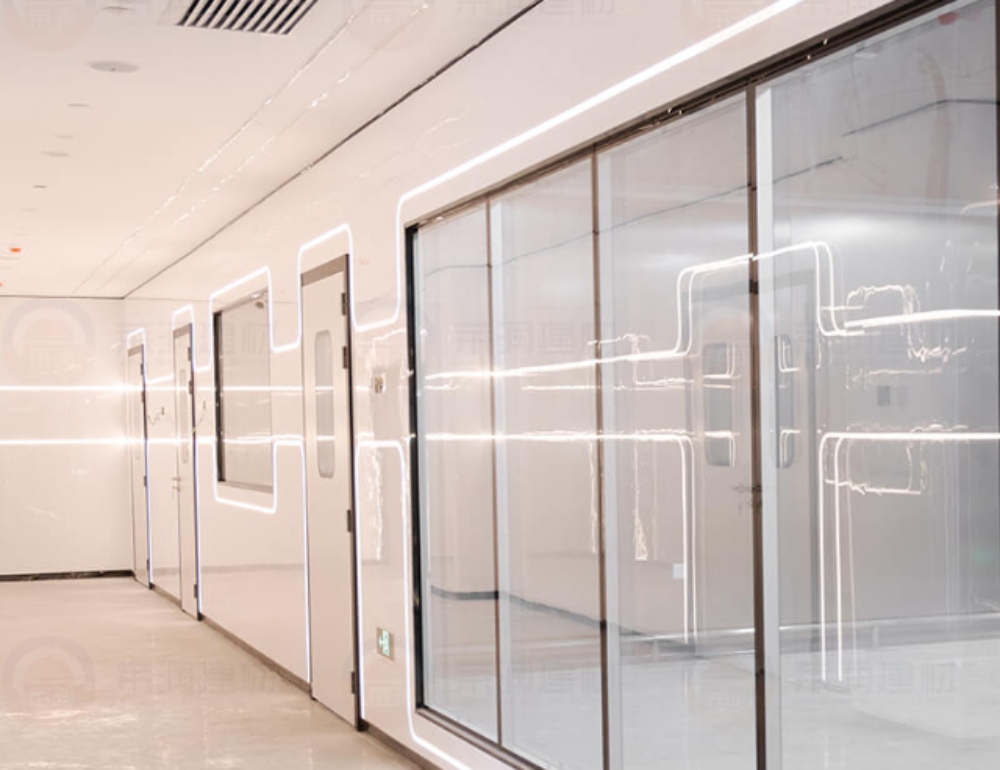
The 50 mm panel is our most commonly used panel for interior partitions, cleanrooms, etc. It is very good for fire/ clean applications where thermal performance is not required but quick installation and compact door/ window/ accessories details are required.
Typical uses include hospitals, laboratories, electronics facilities, food processing rooms, and internal fire-resistant partitions.
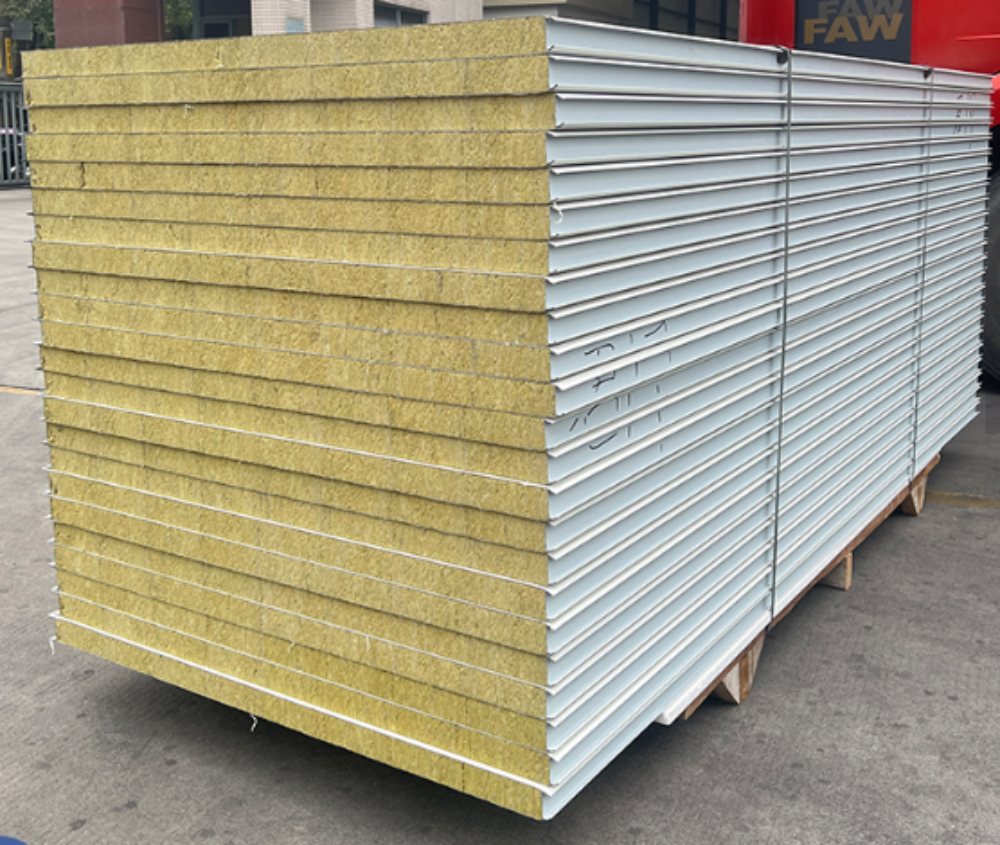
LAIRUN offers a rock wool sandwich panel in thicknesses from 50 mm to 200 mm, with custom options. Listed core densities include 60, 80, 100, and 120 kg/m³. Two 50 mm panels with different density, fiber arrangement, steel skins, and joints may perform quite differently.
When Should You Move to 75 mm or 100 mm?
A 75 mm or 100 mm panel is a useful middle ground. It adds thermal resistance and usually improves sound control without becoming difficult to handle. These sizes suit long temperature differences, noisy machinery, stiffer ceilings, or projects focused on long-term energy use.
One semiconductor project in the supplied LAIRUN material used 50 mm handmade rock wool panels with 100 mm glass-magnesium rock wool panels and 0.476 mm color-coated steel skins. The lesson is simple: one building can use different thicknesses by zone.
When Do 125 mm to 200 mm Panels Make Sense?
Thicker panels are more relevant for exterior envelopes, low-temperature areas, high-noise spaces, and projects with stronger energy targets. They can help when a wall separates environments with a large, continuous temperature gap.
Added thickness increases weight, shipping volume, trim depth, fastener demands, and matching door or window sizes. It may waste money in internal rooms with modest requirements.
Which Project Conditions Should Decide the Thickness?
A specified thickness in a brochure is not necessarily the correct thickness for a complete wall system. Instead, request a test report that includes all of the variables such as core density, metal facing, adhesive, joints, support spacing, and installation direction.
How Much Fire Protection Does the Project Need?
Typically rock wool is made from basalt, which is non-combustible. LAIRUN lists A1 fire-resistant rock wool, tongue-and-groove assembly and some metal-facing options. There are Galvanized steel, Stainless steel and aluminum-based sheets among others.
Fire resistance belongs to the tested assembly, not thickness alone. Do not copy a rating from a glass-magnesium rock wool panel to a plain metal-faced panel. Request reports for the exact construction you plan to buy.
For fire-led projects, review the supplier’s fire resistance and insulation solutions before fixing the wall schedule.
What Temperature Difference Will the Panel Handle?
A room at 20°C next to a room at 23°C does not require the same type of panel as a cold area against a hot production hall. However it is sensible to record the typical temperatures, the highest temperature that will occur, number of hours of operation, humidity and risk of condensation.
For a modest indoor difference, 50 mm may be adequate. For stronger separation or exterior use, start around 75 mm to 150 mm. At 175 mm or 200 mm, ask for a supporting calculation.
Joint quality matters too. Tongue-and-groove assembly can speed installation and create tighter seams, but poor sealing can cancel much of the benefit of a thicker core.
How Much Noise Must Be Controlled?
Rock wool fibers have high sound absorption, hence it’s used around equipment rooms and production areas. The thickness of rock wool has an effect on the sound absorption, however the sound absorption is further affected by the density of the rock wool, presence of metal skins, penetrations, doors and the connections of the panels.
50 mm or 75 mm is usually sufficient for moderate levels of speech and workshop noise, whereas for higher noise levels from machinery or where very high acoustic performance is required, 100 mm would be the minimum to consider and then ask for data. A single unsealed cable entry can ruin a solid wall.
How Should Different Building Areas Be Specified?
Many cost overruns begin when one panel type is copied into every room. A better schedule divides the building into zones and sets a thickness for each real duty.
Cleanrooms and Internal Controlled Areas
For internal cleanrooms, 50mm is often the typical choice for its balance of fire resistance, available floor space, fit and finish, and ease of build. Higher performance sound control or temperature control can be achieved using 75mm or 100mm build-outs.
LAIRUN supplies panels for healthcare, pharmaceuticals, electronics, laboratories, and food production. Its product center also lets buyers compare rock wool with other cleanroom core systems instead of choosing by price alone.
Food, Beverage, and High-Humidity Areas
Rock wool panels are suitable for use in food and beverage facilities, however the facing and joints must be treated with due consideration. It may be necessary to use a stainless steel facing or a coated surface in areas subject to regular washing or where chemicals are involved and corrosion a concern.
For rooms with steady cooling or repeated washdown, 75 mm to 100 mm is a sensible starting point. Check vapor control, sealants, floor-to-wall details, and door finishes. Thickness will not repair a badly detailed joint.
Exterior Walls and Strong Thermal Separation
External walls are subject to wind, rain, solar and temperature variations. A thickness of 100 mm to 150 mm would be suitable for many industrial buildings but in colder climates or where energy is at a premium, thicker panels of 175 mm or 200 mm may be required.
The choice must be checked against local energy rules, wind loads, support spacing, and fire codes. Review relevant project cases for application ideas, but treat each case as a reference, not a ready-made specification.
What Information Should You Send Before Requesting a Quote?
A useful quotation needs more than length, width, and quantity. Send a short technical package so the supplier can recommend a suitable build-up.
Include:
-
Wall, ceiling, or roof application
-
Indoor and outdoor design temperatures
-
Humidity and washdown conditions
-
Required fire classification
-
Acoustic target, when needed
-
Panel span and support spacing
-
Steel-facing material and thickness
-
Corrosion or chemical exposure
-
Door, window, cable, and pipe openings
-
Site location and local code
-
Quantity and delivery schedule
LAIRUN’s company information lists a 38,000 m² facility and daily capacity of 25,000 m². Capacity matters for large orders, but sample approval, drawing review, inspection records, and batch control still matter more than a factory headline. Buyers can use the company’s technical and installation support to discuss drawings and site details.
Final Thoughts
For many internal cleanroom projects, 50 mm is a sound starting point. Move to 75 mm or 100 mm when temperature stability, sound control, or stiffness becomes more important. Consider 125 mm to 200 mm for exterior walls, low-temperature zones, or demanding energy targets, but request calculations and matching test reports before paying for extra thickness.
The best panel schedule may use several thicknesses in one building. That is not overcomplicated. It is often more accurate and cheaper. To review your room conditions, drawings, quantities, and required documents, contact LAIRUN for a project-based recommendation.
FAQ
Q1: Is a 50 mm Rock Wool Sandwich Panel Thick Enough for a Cleanroom?
A: It can be enough for many internal cleanroom walls and ceilings. Check the fire report, span, acoustic target, joint design, and temperature difference before approval.
Q2: Does a Thicker Rock Wool Panel Always Provide Better Fire Resistance?
A: Not automatically. The fire rating belongs to the tested assembly, including the skins, joints, fixings, support system, and core arrangement.
Q3: Should You Choose 75 mm or 100 mm for a Food Factory?
A: Start with the temperature difference, cleaning method, humidity, and noise level. A 75 mm panel may suit moderate conditions, while 100 mm gives more thermal and acoustic separation.
Q4: What Rock Wool Density Should You Choose?
A: Available densities may range from 60 to 120 kg/m³. Higher density can improve stiffness and sound performance, but it also adds weight and cost. Ask for data from the exact panel construction.
Q5: Can LAIRUN Make Custom Panel Thicknesses and Sizes?
A: Yes. LAIRUN lists standard thicknesses from 50 mm to 200 mm, effective widths of 950 mm and 1,150 mm, and custom lengths, with normal lengths up to 6,000 mm.
