



Top 3 Design Elements of Aseptic Rooms for Optimal Sterility and Safety
Time : March 19, 2026 View : 1708
Establishing an aseptic room requires more than choosing attractive panels and completing the work hastily. It demands creating a dependable setting in which all sections function in harmony to exclude microbes and particles. LAIRUN Group has participated in this sector for more than 25 years. Their extensive 38,000-square-meter workshop features eight automated production lines, and through these resources, they have converted cleanroom fabrication into a methodical practice that resembles artisanal skill. This method applies equally to biopharma laboratories or food processing sites, where the primary aim stays constant: preserving sterility while avoiding complicated construction processes.
As you review the design plan for a premium clean area, concentrate on the manner in which components align and manage core building features, including electrical cabling and ventilation mechanisms. The emphasis surpasses mere aesthetics. Rather, it centers on the enduring security of items produced in the interior space.
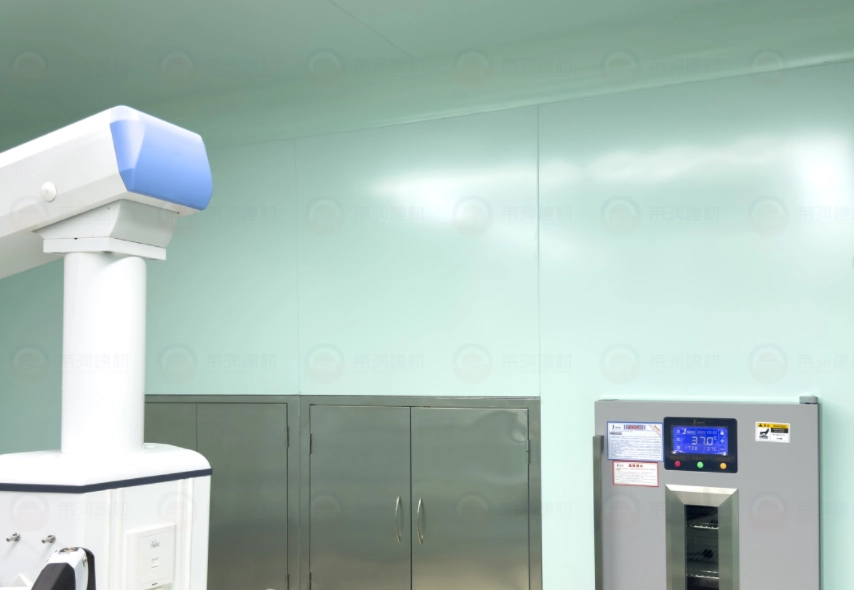
Why Is Seamless Jointing Critical for Maintaining Sterility?
Reflect on the narrow spaces within a typical wall. In a standard office, these present minimal concern. However, in an aseptic room, such spaces serve as shelters for bacteria. When particles begin to gather in the joints, a contamination hazard emerges that proves challenging to remove via cleaning. Consequently, the panel connection technique emerges as potentially the central decision throughout the construction effort.
Enhanced Contamination Control Through Male-Female Jointing
The Male-female jointing rabbet laminboard marks a substantial advancement for individuals focused on sanitation. These panels employ a tongue-and-groove configuration that interlocks firmly, rendering the seam nearly invisible. Because the joints create such secure bonds, particles lack hiding spots, thereby facilitating simpler comprehensive cleaning of the entire area. In fields such as biopharmaceuticals, where a small amount of contamination can destroy a complete production lot, installing these even, joint-free walls becomes essential.
Accelerated Installation with Reduced Labor Costs
A key benefit of this particular jointing approach involves its rapid assembly rate. Owing to the distinctive tongue-and-groove interlocking feature, personnel can construct these enclosures approximately twice as quickly compared to established techniques. This results in savings of about 50 percent in labor expenses. Amid a substantial undertaking, completing the wall erection more promptly enables progression to technological installations and machinery at an earlier stage, which in turn maintains the project schedule and adheres to financial limits.
Superior Fire Resistance and Customizable Core Materials
Protection encompasses more than microbial risks; it includes the structure’s own stability. These panels transcend basic enclosures. They integrate sturdy cores, for instance Rock Wool or Magnesium Oxysulfide (MOS). The majority of these selections attain Class A fireproof classification, indicating resistance to combustion and offering supplementary assurance. Furthermore, thickness variations—commonly 50mm, 75mm, or 100mm—permit adaptation according to insulation or acoustic requirements for the site.
Walls represent only the initial phase. After achieving a firm barrier, planning the incorporation of electrical power and data lines becomes necessary without breaching the ideal sterile conditions.
How Do Embedded Utilities Improve Safety and Hygiene?
Within numerous legacy cleanrooms, cables extend along wall exteriors or conceal within disordered channels. Such setups not only convey an untidy impression but also provide surfaces for particle accumulation. When pursuing peak sterility, reducing available adhesion points for contaminants remains a priority.
Hidden Wiring Solutions via Embed Line Pipes
At this juncture, the Embed line pipes rabbet laminboard provides a practical remedy. Rather than placing wires externally, conduits embed within the panels during factory assembly. Cables route directly via the internal core, ensuring protection, order, and invisibility. This arrangement enhances the area’s pristine visual appeal. Even more significantly, it alleviates a primary maintenance burden, as no external pipes demand repeated cleaning.
Flexible Material Options for Conduit Systems
Since initiatives differ in scope, configurations must allow adaptability. Based on regional construction regulations or laboratory-specific demands, choices encompass galvanized pipes or PVC alternatives for internal cable pathways. This tailoring avoids sacrificing compliance with safety norms merely to achieve a neat wall surface. Production addresses all details beforehand, so upon site delivery, panels stand prepared for instant wiring integration.
Optimal Structural Support with Rock Wool Cores
These panels with integrated conduits generally contain a compact Rock Wool core. This substance performs well due to its fibers oriented upward, imparting considerable rigidity and capacity to bear loads. Beyond merely sustaining overhead structures, it dampens acoustic disturbances and maintains thermal equilibrium, which aligns precisely with needs in active food processing facilities or precision-oriented medical laboratories.
Although walls and cabling safeguard the edges, the upper portion of the cleanroom undertakes considerable operational responsibility. The ceiling supports the ventilation flow that upholds aseptic status initially.
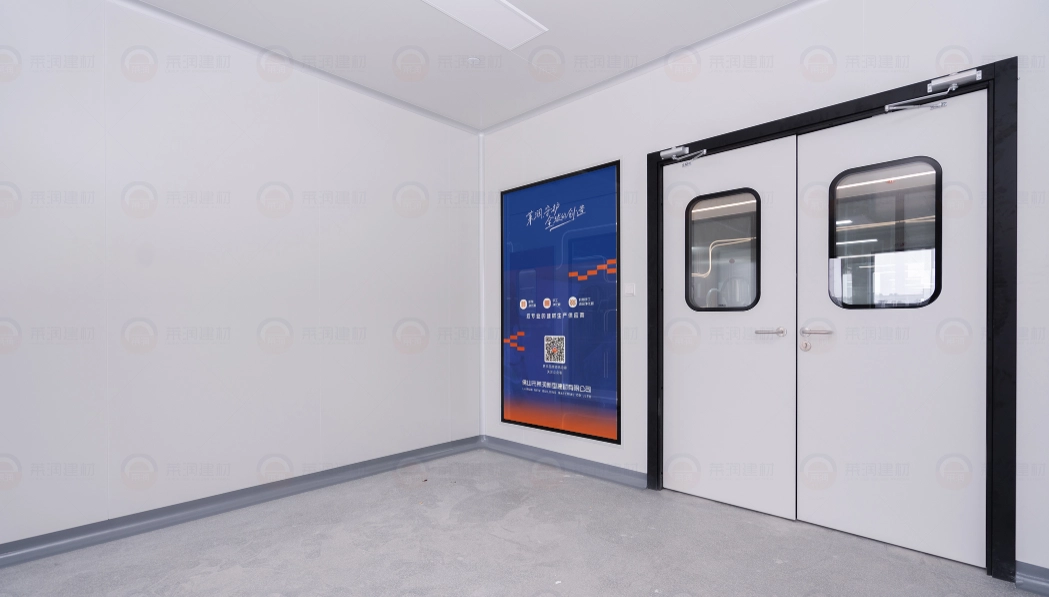
What Makes Ceiling Solutions Vital for Aseptic Environments?
An inadequate ceiling design can compromise the cleanroom’s overall success. Ordinarily, this section accommodates Fan Filter Units (FFUs) that introduce purified air. Should openings occur or panels exhibit weakness, pressure irregularities arise, allowing external contaminants to infiltrate gradually.
Effective Airflow Management with FFU Ultra-thin Metal Ceiling Clapboards
The FFU Utral-thin metal ceiling clapboard, frequently termed blind panels, complements air purification setups ideally. They install within the ceiling lattice beside FFUs to seal regions lacking ventilation requirements. Through forming a compact, uniform barrier, they sustain the space’s internal pressure. Thus, particles and microbes avoid entry from the contaminated zone overhead.
High-Strength Materials with Precision Engineering
Ceiling panels necessitate durability, given potential foot traffic during servicing or the need to uphold substantial loads. These blind components construct with robust materials and resist distortion or drooping across time. LAIRUN fabricates them using diverse cores—for example, aluminum honeycomb or MGO board—to balance ease of placement with enduring fortitude. Automated processes guarantee exact measurements, ensuring seamless integration into the ceiling framework consistently.
Stylish and Practical Integration for Laboratory Use
These ceiling options excel in performance and appearance. They offer assorted coatings, such as anti-static films or stainless steel, suiting semiconductor operations or sophisticated medical laboratories. Their tolerance for humidity and resistance to mold ensure the surface remains hygienic despite environmental shifts. This reliable, low-maintenance attribute particularly attracts engineers in developing intricate setups.
Merging these three components—jointless walls, concealed services, and precise ceiling assemblies—yields an area equipped for rigorous worldwide sterility benchmarks. LAIRUN’s dedication to reliability and progress establishes them as a trustworthy ally for endeavors expanding cleanroom potentials.
FAQ
Q1: How much faster is the installation with tongue-and-groove panels compared to traditional ones?
A: Generally, completion occurs roughly twice as rapidly. The interlocking joint style diminishes labor duration by about 50 percent, substantially aiding in controlling building expenditures.
Q2: Can the core material of the panels be customized for specific fire safety needs?
A: Yes, certainly. Options span cores like Rock Wool, Magnesium Oxysulfide, or Aluminum Honeycomb, with most satisfying Class A fireproof criteria to deliver maximum protection.
Q3: What industries are these aseptic room solutions best suited for?
A: These solutions fit any context requiring unwavering cleanliness. Examples include biopharmaceuticals, semiconductor manufacturing, food and beverage production, and medical laboratories.
