


Why Does No Halogen Reversion Matter So Much for Humid Cleanroom Walls
Time : July 10, 2026 View : 1136
Small details can become big cleanroom problems. Wall panels look good when handed over but, after months of wet weather, washdown cleaning, air-conditioning cycles or temperature swings, poor core material can begin to show signs of damage through stains, white salt deposits, panel swelling, metal corrosion or seam cracks. For projects in laboratory environments, hospitals, electronics manufacturing facilities, food processing workshops or pharmaceutical cleanrooms such problems are not purely aesthetic and can affect seal, hygiene, life and maintenance costs.
That is why no halogen reversion has become a serious buying point for humid cleanroom walls. It means the panel core should not release white crystalline substances, absorb moisture badly, or create hidden corrosion risk around steel sheets, rivets, aluminum profiles, and joints. In real projects, a clean wall must stay clean after rainy seasons, not only during the first inspection.
What Does No Halogen Reversion Mean for Cleanroom Wall Panels?
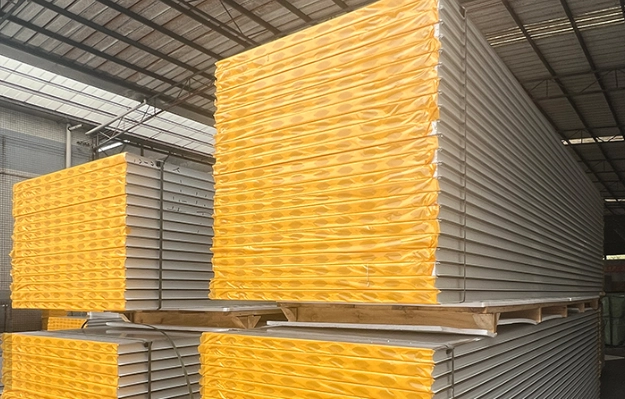
No halogen reversion sounds like a chemical term, but the site result is easy to judge. The wall surface should stay dry, clean, stable, and free from salty white marks. For cleanroom buyers, this matters because a panel system is not bought for one season. It is bought for years of washing, sealing, inspection, and daily operation.
Why Do White Crystals Become a Warning Sign?
White crystalline substances on wall panels usually mean the core material has reacted badly with moisture. Once this starts, the problem can move from surface dirt to deeper material failure. The panel may still stand, but the cleanroom manager will not be happy with it. It looks messy, and more importantly, it raises questions about hygiene control.
A good humid-area panel should help avoid:
- White salt-like deposits on the wall surface
- Corrosion around rivets, steel sheets, and aluminum parts
- Weakening near seams and edges
- More cleaning work after wet weather
- Doubts during customer audits or internal checks
For export buyers, this is a real concern. A project in Southeast Asia, the Middle East coastal area, or a rainy laboratory zone may run air conditioning every day while the outside air stays humid. Cheap panels can pass early checks but fail slowly.
Why Does Moisture Absorption Hurt Long-Term Wall Stability?
Moisture absorption can make the panel expand, deform, or lose flatness. It may also affect the bond between the surface metal and inner core. In a cleanroom wall, even a small deformation can create visible seams, dust traps, or cleaning blind spots.
The Magnesium Oxysulfide Sandwich Panel is designed to solve this issue with a 100% no halogen reversion core. It is water-resistant, moisture-proof, and not easily affected by condensation or humid air. That is the key reason it fits humid cleanroom walls better than many older hollow glass magnesium composite panels.
Why Is Magnesium Oxysulfide Better for Humid Cleanroom Walls?
Material choice decides whether the cleanroom wall stays stable after installation. Some buyers focus only on thickness and price, but the core formula is where many hidden problems begin. A good panel should resist moisture, keep shape, stay flat, and still meet fire and hygiene needs.
How Does the Core Structure Reduce Deformation?
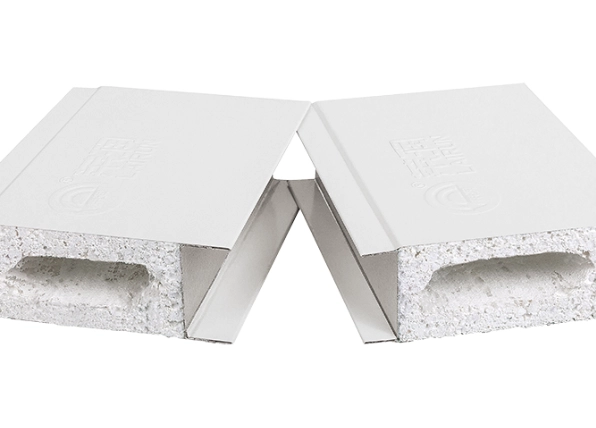
LAIRUN uses an arch bridge structural principle in its magnesium oxysulfide core. This structure helps disperse local stress instead of letting pressure gather in one weak point. The core is integrally molded in upper and lower layers inside a mold, so the panel needs less glue for bonding.
That matters for humid cleanroom walls because too much glue and unstable core filling can cause deformation under pressure, heat, or cooling cycles. The product page states that the load-bearing capacity is about twice that of hollow glass magnesium panels. In simple words, it is built to stay straighter and stronger.
This is not a small detail. Wall panels carry doors, windows, accessories, profiles, and sometimes ceiling connections. If the core is weak, problems often show at the joints first.
Why Does Low Glue Use Matter?
Less glue can mean fewer bonding risks when temperature and humidity change. A cleanroom wall may go through cooling at night, warm operation during the day, and repeated cleaning. When the core and surface materials move differently, cheap bonding can show bubbles or uneven spots.
A magnesium oxysulfide core with stable molding helps reduce that risk. For buyers, this means fewer repair calls and less worry after installation. It also makes the wall feel more solid. Experienced installers notice this quickly, even though they may not say it in fancy words.
How Does No Halogen Reversion Support Fire Safety and Cleanliness?
Cleanroom walls must do more than resist moisture. They also need fire safety, low pollution risk, good sealing, and easy cleaning. No halogen reversion helps with hygiene, while the core’s fireproof nature helps with safety. The two points work together in projects where compliance matters.
Can One Panel Handle Fire, Moisture, and Cleanliness?
The magnesium oxysulfide sandwich panel has Class A non-combustible performance under GB8624-1997. It can resist local exposure above 1,000°C without heating the back surface quickly, and the burnt area does not keep spreading. It also does not release smoke, toxins, or pollutants during combustion.
For cleanroom buyers, these points are practical:
- Fire safety helps meet project approval
- No smoke or toxic release supports safer indoor areas
- Moisture-proof performance helps daily maintenance
- No halogen reversion keeps surfaces cleaner
- Thermal insulation and sound insulation improve room performance
If a project needs both clean appearance and safety, it is risky to choose a panel based only on low price. A wall that needs repair after one wet season can cost more than the price gap.
Which Industries Care Most About This?
No halogen reversion is useful for many clean environments, especially where moisture, cleaning, or strict audits are common. You can check broader cleanroom material categories through the LAIRUN Product Center when comparing different core materials.
Typical project areas include:
- Biopharmaceutical workshops
- Research laboratories
- Electronics and semiconductor cleanrooms
- Hospitals and medical equipment areas
- Food and daily chemical plants
- Health product workshops
A food workshop may care more about hygiene and cleaning. A laboratory may care more about moisture, sealing, and chemical resistance. A semiconductor project may care about stable wall systems and dust control. The material decision is not always the same, but no halogen reversion is a strong base point in humid projects.
Why Does Flatness Matter After the Wall Is Installed?
Flatness is easy to ignore during early quotation, but it becomes obvious after installation. Under cleanroom lights, even small uneven areas can look bad. More seriously, poor flatness can affect sealing strips, corner profiles, panel joints, and cleaning quality.
Why Is 0.1 mm Flatness Error Valuable?
LAIRUN’s magnesium oxysulfide composite panel can control overall flatness error within 0.1 mm. This is much better than materials that need secondary manual bonding and may show errors above 1 mm. A 1 mm problem may not sound dramatic on paper, but on a long cleanroom wall, it can be seen.
Better flatness helps you get:
- Neater wall appearance
- Tighter panel joints
- Less visible seam difference
- Better sealing at doors and windows
- Easier cleaning along the surface
A cleanroom is judged by small things. Corners, gaps, screw points, and wall shine all tell the buyer whether the project was done properly. Flat panels make the whole room feel more controlled.
How Do Tongue-and-Groove Joints Help Installation?
The product uses tongue-and-groove jointing. This connection method helps panels fit together faster and more neatly. It also supports better sealing and easier alignment on site. For contractors, it can reduce labor pressure. For owners, it helps shorten the messy stage of installation.
LAIRUN’s cleanroom panel solutions also include service support, technical communication, and installation guidance. You can review the service page when checking what type of project support may be needed before ordering.
How Should You Choose the Right Specification for Humid Cleanroom Walls?
A good panel choice is not only about material name. Width, thickness, length, surface metal, coating, color, and joint structure all affect the final result. A buyer who checks these points early will avoid many site changes later.
What Specifications Should You Check First?
For magnesium oxysulfide sandwich panels, the effective width can be 1150 mm or 950 mm. Thickness options include 50 mm, 75 mm, 100 mm, 125 mm, 150 mm, 175 mm, 200 mm, or custom sizes. Length can be made to user requirements, normally within 6000 mm.
You should confirm:
- Wall height and panel length
- Required thickness for partition or ceiling use
- Fire rating needs
- Sound insulation needs
- Surface metal type
- Coating and color
- Door and window matching details
- Joint method and accessories
Surface metal options can include galvanized steel sheet, stainless steel sheet, aluminum alloy sheet, aluminum-magnesium-manganese sheet, or inorganic pre-coated board. For humid cleanrooms, surface treatment should also be checked carefully. Scrub resistance, rust resistance, acid and alkali resistance, fire prevention, sound insulation, and thermal insulation all matter.
When Should You Ask for Customization?
Custom panels make sense when the project has special wall height, color control, ceiling design, high cleaning frequency, or strict appearance requirements. LAIRUN provides custom colors such as grey, ivory white, navy, blue tones, and buyer-required colors.
For large projects, it is also useful to review completed applications. The case center lists project examples across laboratories, healthcare, chemical, and other clean industries. Case references are not decoration. They help you judge whether a supplier has handled real site needs, not only sample panels.
Why Should Supplier Strength Be Checked Before Ordering?
Panel performance depends on formula, production line, inspection, and after-sales handling. A good sample is helpful, but repeat supply is more important. Overseas buyers usually need stable batches, clear documents, fast replies, and packaging that survives shipping. Small errors can delay a whole cleanroom schedule.
What Makes LAIRUN Relevant for Cleanroom Projects?
LAIRUN is a cleanroom sandwich panel manufacturer with a 38,000 square meter factory area, automated production lines, and high daily production capacity. Its product range covers medical-grade rock wool panels, glass magnesium panels, magnesium oxysulfide panels, and glass magnesium rock wool panels. The company has experience serving industries such as renewable energy, electronics, semiconductors, biopharmaceuticals, laboratories, healthcare, and food production.
The more important point for humid cleanroom walls is that LAIRUN develops and produces magnesium oxysulfide core materials and finished panels. This gives better control over formula, supply, and product consistency. That is often safer than buying from a source that only assembles panels from outside core materials.
What Should You Ask Before Placing an Order?
Before confirming a humid cleanroom wall panel, ask these questions:
- Does the core have no halogen reversion?
- Is it resistant to condensation and humid air?
- What is the fire rating?
- What thickness is suitable for the room?
- Can the surface metal match the cleaning environment?
- Are tongue-and-groove joints available?
- Can the supplier support drawings, samples, and after-sales questions?
- Are there case references for similar industries?
For direct communication, samples, or project details, the contact page is the most direct next step.
FAQ
Q1: Why Does No Halogen Reversion Matter in Humid Cleanroom Walls?
A: It helps prevent white crystalline substances, moisture damage, corrosion risk, and dirty-looking wall surfaces. For cleanrooms, this supports better hygiene, easier cleaning, and longer panel service life.
Q2: Is Magnesium Oxysulfide Better Than Hollow Glass Magnesium Panels?
A: For humid cleanroom wall use, magnesium oxysulfide has clear advantages. LAIRUN’s panel offers no halogen reversion, better moisture resistance, stronger load-bearing capacity, and better flatness than many older hollow glass magnesium composite panels.
Q3: Can Magnesium Oxysulfide Sandwich Panels Be Used for Fireproof Cleanrooms?
A: Yes. The panel has Class A non-combustible performance and can withstand local high-temperature exposure above 1,000°C. It also does not release smoke, toxins, or pollutants during combustion.
Q4: What Thickness Should You Choose for Cleanroom Walls?
A: Common choices include 50 mm, 75 mm, and 100 mm, while thicker or custom panels are also available. The right thickness depends on wall height, fire requirements, sound insulation needs, and project design.
Q5: How Long Can a No Halogen Reversion Panel Last?
A: LAIRUN’s magnesium oxysulfide panel has a stable molecular structure and a service life of no less than 20 years under proper use. It resists aging, corrosion, bacteria, insects, and termites, which makes it suitable for long-term cleanroom projects.
